How to Assess Neighbourhood Noise Levels (2026 Guide)
How to assess neighbourhood noise levels before you buy or rent: noise maps, phone readings, the best times to visit and council complaint records.
Start with the Defra strategic noise maps (England) or Welsh Government equivalents, checking both day and night layers. Visit at a weekday evening, late night and weekend morning, listening for what repeats. Take rough phone readings to compare streets, then ask the council's environmental health team about complaint history and check live planning applications for new venues or works.
In this post
- Table of Contents
- How to Assess Neighbourhood Noise Levels Before You Commit
- What Counts as a Normal Noise Level in a Residential Area
- Using Noise Maps for Property Searches
- How to Measure Noise Levels With a Phone
- The Best Time to Visit a Property to Check Noise
- Noise Complaints and Local Authority Records
- Common Mistakes When Assessing Neighbourhood Noise
- Conclusion: Build a Noise Picture Before You Offer
- Frequently Asked Questions
Table of Contents
- How to Assess Neighbourhood Noise Levels Before You Commit
- What Counts as a Normal Noise Level in a Residential Area
- Using Noise Maps for Property Searches
- How to Measure Noise Levels With a Phone
- The Best Time to Visit a Property to Check Noise
- Noise Complaints and Local Authority Records
- Common Mistakes When Assessing Neighbourhood Noise
- Conclusion: Build a Noise Picture Before You Offer
- Frequently Asked Questions
Last Updated: October 16, 2026
How to Assess Neighbourhood Noise Levels Before You Commit
Knowing how to assess neighbourhood noise levels starts with one hard truth: a viewing tells you almost nothing. Most viewings happen on a weekday afternoon, when roads are quiet and neighbours are out. Noise is one of the complaints buyers raise most often after they move in, and sellers are not generally required to volunteer it unless they have had a dispute or notice. At JACKSON, we build area reports for any postcode in England and Wales, and noise is one of the factors we check.
Below, we show you exactly how to build a noise picture before you offer: what counts as normal, where to find official data, how to measure sound yourself, and when to visit.
What Counts as a Normal Noise Level in a Residential Area
There is no single legal noise limit for a home. What counts as normal depends on the area, the time of day, and who is listening.
Noise levels are measured in decibels (dB). A quiet bedroom at night sits around 30 dB. Normal conversation is about 60 dB. A busy main road heard from a front room can reach 70 dB or more.
Planning guidance treats 50-55 dB as a rough daytime threshold for road traffic noise affecting homes, with lower figures at night. These are guidelines, not guarantees. A level one person shrugs off keeps another awake.
What matters most:
- Time of day. Daytime and night-time expectations differ.
- Duration. A weekly bin lorry is not the same as a nightly delivery depot.
- Character. Low rumbling bass travels further than a passing car.
- Your sensitivity. Only you know what you can sleep through.
Using Noise Maps for Property Searches
Noise maps for property searches are the fastest starting point. The government publishes strategic noise maps for England covering major roads, railways and airports, built from official modelling.
Here is how to use them:
- Open the Defra strategic noise mapping portal for England and check the address.
- Look at both day and night layers, not just daytime.
- Note the nearest source: a motorway, a railway line, an airport flight path.
- Check whether the property sits in a higher band than the surrounding streets.
The Defra strategic noise maps for England show broad patterns, not your bedroom. They tell you whether an area is worth a closer look. They cannot tell you what a specific flat hears through its windows.
A strategic map is a screening tool, not a verdict. Use it to decide where to dig deeper.
How to Measure Noise Levels With a Phone
Learning how to measure noise levels with a phone gives you a rough reading on the spot. Phone microphones are not laboratory instruments, but they are good enough to compare one street against another.
A simple method:
- Download a sound level meter app.
- Stand at the property boundary, not inside a shop doorway.
- Hold the phone at arm's length, microphone pointing at the road.
- Take three readings of one minute each, morning and evening.
- Note the highest and average figures.
What to record:
- Average level in dB
- Loudest single event
- What caused it (lorry, aircraft, train)
- Time and weather
Treat the numbers as a comparison, not a measurement. A phone that reads 5 dB high still tells you Street A is louder than Street B. For anything you intend to rely on, a calibrated meter is the honest option.
The Best Time to Visit a Property to Check Noise
The best time to visit a property to check noise is a weekday evening between 5pm and 8pm, plus one late-night visit. Afternoon viewings hide almost everything.
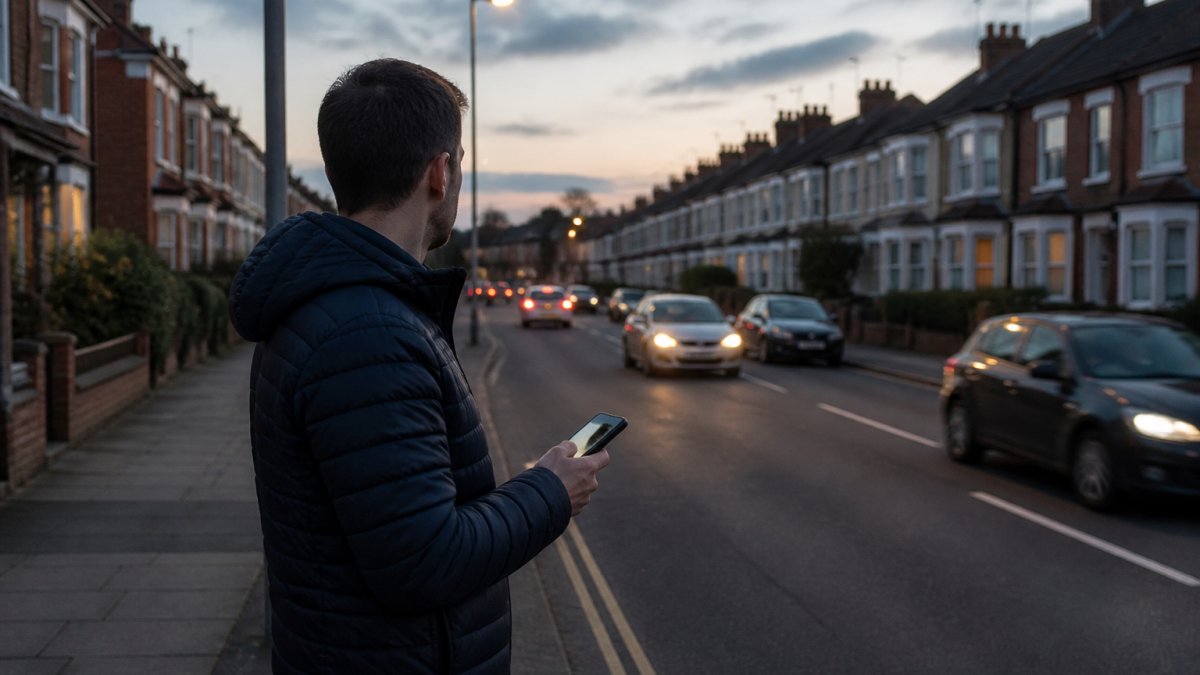
Plan three visits if you can:
- Weekday evening (5-8pm). Rush hour, children home, TVs on.
- Late night (10pm-midnight). Tests sleep disturbance from pubs, takeaways and deliveries.
- Weekend morning (7-9am). Catches early deliveries, lawnmowers and sports clubs.
Stand still for ten minutes and say nothing. Listen for what repeats. One barking dog is chance; a kennels is a pattern.
Also check the route to the nearest station or bus stop. A quiet cul-de-sac can sit behind a loud arterial road.
Noise Complaints and Local Authority Records
Noise complaints and local authority records are public information, and they are the closest thing to a history of an area. Councils record complaints about barking dogs, music, building work and commercial premises.
How to check:
- Search the council's planning portal for the address and nearby streets.
- Look for noise-related enforcement notices and abatement notices.
- Ask the environmental health team whether the street has a complaint history.
- Check for live planning applications for pubs, clubs, gyms or industrial units.
A single complaint means little. A cluster of complaints about the same premises is a warning. So is a new late-licence application on a quiet road.
The Planning Portal guidance on planning applications explains how to search local records. For the legal side, an abatement notice is served under the Environmental Protection Act 1990, and the government guidance on noise nuisances sets out how councils handle it.
Common Mistakes When Assessing Neighbourhood Noise
Most buyers make the same four errors. Avoiding them puts you ahead of the crowd.
- Viewing only in the afternoon. The quietest hour of the working week.
- Trusting the estate agent's answer. Sellers are not generally obliged to volunteer noise unless it has led to a dispute or notice.
- Ignoring the night-time map layer. Night noise is what wakes you.
- Skipping the planning portal. A pending late licence changes everything.
A common mistake is judging noise from inside the property with the windows shut. Modern glazing hides a main road. Open the window and stand there for a full minute.
What most guides miss is the direction of travel. An area can get louder, not quieter. New build, new road layout, new venue. Check what is planned, not just what is there.
Conclusion: Build a Noise Picture Before You Offer
Noise is the risk buyers notice last and regret longest. Maps, phone readings, timed visits and complaint records each give you one piece of the picture. Together they give you a verdict.
That is what our area reports do. JACKSON reads the noise data for your postcode, checks it against planning records, and puts a named analyst's name and a plain-English verdict on the page. The person-checked Area Report (from £19) is delivered as a PDF within one working day; the £9 Instant Report arrives in minutes.
Start with the free check and see what your postcode is really like before you commit.
Frequently Asked Questions
How can I check noise levels around a property?
Start with official noise maps published by Defra and local councils, which show road, rail and aircraft noise bands for an area. Then visit the property yourself at different times of day, ideally on a weekday morning, a weekday evening and a weekend. Use a sound level meter app on your phone to record readings at the front and back of the building. Finally, check the council's website or contact its environmental health team to ask about noise complaints linked to the address or street.
What is a normal noise level in a residential area?
Quiet residential streets typically sit around 35 to 45 decibels (dB) at night, while daytime levels in a suburban area often range from 50 to 60 dB. A busy main road can push daytime readings above 70 dB. For context, normal conversation is roughly 60 dB and a petrol lawnmower is about 90 dB. If a phone app shows sustained readings above 65 dB inside a bedroom with windows closed, that is worth investigating further before you commit.
Are online noise maps accurate for a specific address?
Strategic noise maps produced under the Environmental Noise Regulations give a good indication of road, rail and aircraft noise across England and Wales, but they model average conditions over large areas rather than a single front door. They will not capture a nearby pub garden, a school playground or a delivery yard. Treat noise maps for property searches as a starting filter, then verify with a site visit and, if needed, a council environmental health enquiry.
Can I use a phone app to measure noise levels?
Yes, but treat the results as indicative rather than precise. Phone microphones vary in sensitivity and apps are not calibrated to the same standard as a professional sound level meter. To get the most useful readings, hold the phone at arm's length, avoid covering the microphone, take several samples over 30 seconds each, and compare readings across rooms. The relative difference between the front and back of a property is often more informative than the absolute number.
Short on time? Let us run the checks for you
Viewing this weekend and don't fancy an afternoon of maps? The free Foolproof Viewing Check pulls the headline tiles for any address you're looking at — no card, no sign-up.
Want the whole area read by hand and written up, checked and signed off by a real person before it reaches you? That's the Jackson pre-purchase area report. Software does the legwork so it's quick and affordable; a person makes the call so you can trust it. Reports start from £19.
Frequently asked questions
How can I check noise levels around a property?
Start with official noise maps published by Defra and local councils, which show road, rail and aircraft noise bands for an area. Then visit the property yourself at different times of day, ideally on a weekday morning, a weekday evening and a weekend. Use a sound level meter app on your phone to record readings at the front and back of the building. Finally, check the council's website or contact its environmental health team to ask about noise complaints linked to the address or street.
What is a normal noise level in a residential area?
Quiet residential streets typically sit around 35 to 45 decibels (dB) at night, while daytime levels in a suburban area often range from 50 to 60 dB. A busy main road can push daytime readings above 70 dB. For context, normal conversation is roughly 60 dB and a petrol lawnmower is about 90 dB. If a phone app shows sustained readings above 65 dB inside a bedroom with windows closed, that is worth investigating further before you commit.
Are online noise maps accurate for a specific address?
Strategic noise maps produced under the Environmental Noise Regulations give a good indication of road, rail and aircraft noise across England and Wales, but they model average conditions over large areas rather than a single front door. They will not capture a nearby pub garden, a school playground or a delivery yard. Treat noise maps for property searches as a starting filter, then verify with a site visit and, if needed, a council environmental health enquiry.
Can I use a phone app to measure noise levels?
Yes, but treat the results as indicative rather than precise. Phone microphones vary in sensitivity and apps are not calibrated to the same standard as a professional sound level meter. To get the most useful readings, hold the phone at arm's length, avoid covering the microphone, take several samples over 30 seconds each, and compare readings across rooms. The relative difference between the front and back of a property is often more informative than the absolute number.