Before You Buy: What a Drainage and Water Search Shows, and the Risks That Affect Value (England & Wales)
See what a drainage and water search shows in England and Wales conveyancing. Spot build over, flooding and billing risks, order the right CON29DW or asset search, and...
In this guide
- Table of Contents
- What does a drainage and water search report actually contain?
- Which type of search do you actually need: CON29DW or something else?
- How do you order a search, and what will it cost?
- What liabilities can the search reveal, and how serious are they?
- How should you act on the report’s findings?
- Does a drainage search affect valuation or mortgage approval?
- Do drainage search requirements differ across the UK?
- Can the search flag flood risk or conservation issues too?
- What actually matters when you read the report
- How Nofooly turns a technical report into a clear decision
- Where to check the official records yourself
- Sources
- FAQ
A drainage and water search, formerly known as CON29DW, tells you whether a property connects to the public water supply and sewer network, how those services are billed, and whether any public pipes or water mains sit inside the property boundary. For conveyancers, it is the single document that turns hidden infrastructure risk into a documented fact. Plain-English reports can work alongside this official record, translating the technical detail into something a buyer can actually act on.
TL;DR:
- The search reveals whether a property’s sewer connection is public, private, or septic, and details billing methods that impact ongoing costs.
- It may not show private or unadopted pipes, and historic drainage arrangements or flood histories can significantly affect property value or insurability.
- Orders should specify the correct water company based on the property location, with costs and turnaround times varying regionally and by service type.
- Build-over agreements, private drainage liabilities, or recent flooding recorded in the report can trigger additional checks or legal restrictions on extensions.
- Buyers should proactively ask about flagged assets, commission CCTV surveys for private drainage, and cross-reference local planning rules for conservation or flood risk concerns.
Table of Contents
- What does a drainage and water search report actually contain?
- Which type of search do you actually need: CON29DW or something else?
- How do you order a search, and what will it cost?
- What liabilities can the search reveal, and how serious are they?
- How should you act on the report’s findings?
- Does a drainage search affect valuation or mortgage approval?
- Do drainage search requirements differ across the UK?
- Can the search flag flood risk or conservation issues too?
- What actually matters when you read the report
- How Nofooly turns a technical report into a clear decision
- Where to check the official records yourself
- Sources
- FAQ
What does a drainage and water search report actually contain?
The report opens with maps and asset plans showing exactly where public sewers, water mains, and other infrastructure run relative to the property boundary. If a public sewer crosses under a garden or, worse, under a proposed extension footprint, that single line on the map can dictate whether planning permission gets granted at all.
Connection status comes next. The report states whether a property is on a public sewer, a private sewer, a septic tank, or a sealed cesspool tank, each carrying very different maintenance obligations for the owner.
Billing information follows: whether the property is charged on a water meter or on the old rateable value system, and which water company issues the bill. This matters more than it sounds. A property still on rateable value billing can face a jump in costs once a meter is fitted, and buyers rarely think to ask before completion.
Statistic callout: Water and sewerage charges vary by undertaker and billing method, which is exactly why the drainage and water search confirms which company bills the property and how, before the buyer is committed.
The report has some limits worth knowing:
- Unadopted private pipes often don’t appear on the public asset maps at all.
- Lateral drains connecting a property to the main sewer can sit in a legal grey zone despite transfer rules.
- Records reflect what water undertakers hold, not a physical inspection of the ground.
- Historic properties sometimes have drainage arrangements that predate current mapping standards.
Which type of search do you actually need: CON29DW or something else?
The CON29DW is the Law Society-recommended enquiry for residential and commercial conveyancing, and it remains the default choice for most transactions. It covers connection status, billing, and the location of public assets within the boundary, backed by liability cover that protects the searcher if the official data later proves wrong.
Regulated third-party searches exist too, compiled by licensed search providers rather than the water undertaker directly. They draw on the same underlying data but can sometimes turn results around faster, though they don’t always carry the same liability protection as the official CON29DW.
For anyone planning to build rather than simply buy, an asset location search is the better tool. These give technical maps and pipe details that a standard CON29DW omits entirely: pipe depths, diameters, and precise routing.
- CON29DW: standard conveyancing enquiry, Law Society backed, includes liability cover.
- Regulated third-party search: same data source, sometimes quicker, cover varies by provider.
- Asset location search: technical maps for developers, pipe sizes and depths, usually a separate fee.
- Business accounts: available for conveyancers and agents ordering multiple searches regularly, often with volume pricing.
How do you order a search, and what will it cost?
Coverage depends on where the property sits. The four undertakers handling the bulk of residential drainage enquiries are Thames Water, United Utilities, Dŵr Cymru (Welsh Water), and Severn Trent, though smaller regional undertakers also operate in specific areas. Confirm the correct undertaker for an address before ordering; getting this wrong wastes both time and the fee.
To order, you typically need:
- The full property address and postcode.
- A payment card for the application fee, or a business account if you’re a conveyancer ordering regularly.
- Confirmation of whether you need a standard CON29DW or an asset location variant.
- Any supporting plans, if the request relates to a proposed development.
Fees vary by undertaker and property type, and most providers, including Dŵr Cymru, state clearly that one-off application payments are non-refundable once submitted, regardless of the outcome.
Standard turnaround for a CON29DW typically runs a few working days, though this shifts with regional demand and whether the undertaker offers an expedited or same-day service for an additional charge.
If a report is delayed past the quoted timescale, chase the undertaker directly rather than the search agent. Ask for a written update and, where the transaction timeline is tight, request the expedited tier if one exists.
What liabilities can the search reveal, and how serious are they?
Private sewers, septic tanks, and lateral drains not adopted by the water company remain the owner’s responsibility to maintain and repair. That liability transfers with the property whether or not the buyer knew about it beforehand.
Build-over risk is one of the sharper findings. If a public sewer or water main runs under a building or an extension footprint without a proper build-over agreement in place, the water company can, in principle, require access for repairs, and any future works on that footprint may need separate consent.
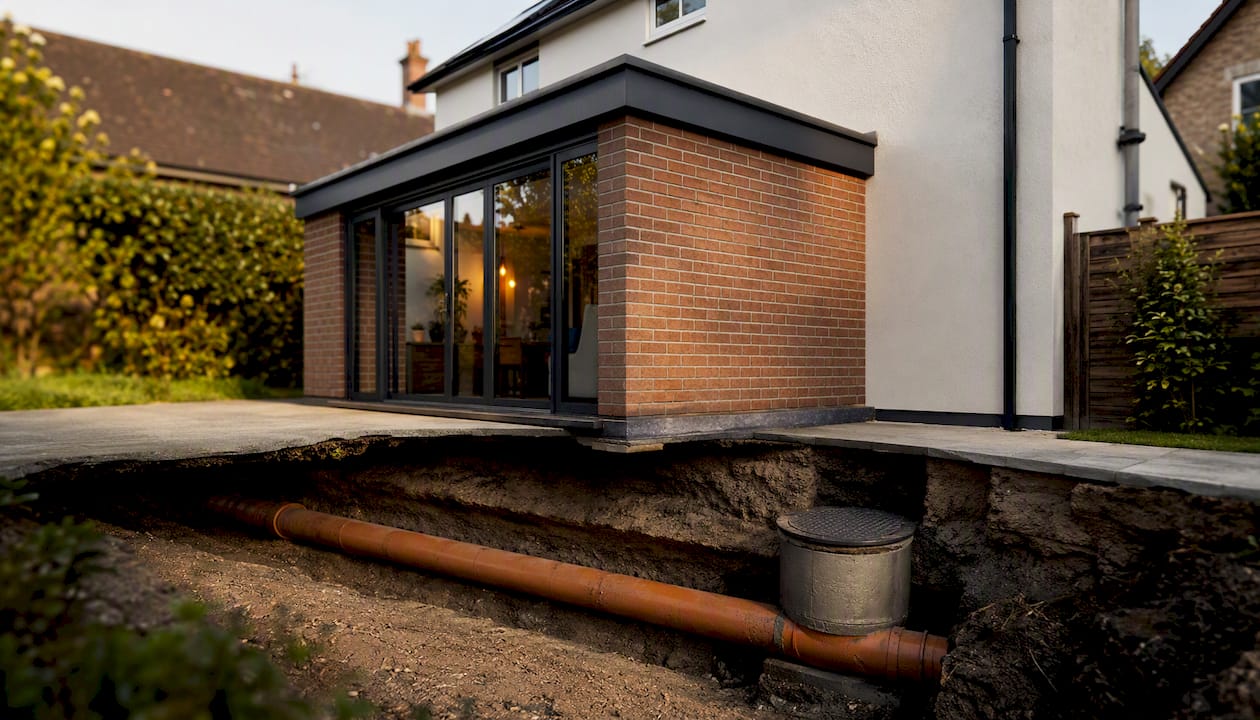
Sewer flooding history matters too. A documented history of flooding at or near the address can affect insurance availability and mortgage approval, and remediation of the underlying cause can be expensive.
Clear triggers for further checks:
- A public sewer marked within the property boundary or under a structure.
- A private treatment plant or septic tank with no recent service record.
- Any reference to historic sewer flooding.
- Plans to extend over or near a mapped asset.
Pro Tip: If the report flags a public sewer near an extension, don’t wait for the seller to explain it. Commission a CCTV drain survey before exchange, not after.
How should you act on the report’s findings?
Turn every red flag into a written question. Ask the seller for maintenance records on any private sewer or septic tank, ask the local authority about historic flooding, and ask the undertaker directly if a build-over agreement exists for any asset under the building.
- List every flagged asset and match it against the property’s footprint and any extension plans.
- Request an asset location search if pipe depth or size matters for planned work.
- Commission a CCTV drain survey where private drainage or a treatment plant is involved.
- Check with the local planning and building control team if a build-over agreement is missing.
Pro Tip: Keep every enquiry in writing. A verbal reassurance from an estate agent carries no weight if a drainage dispute surfaces after completion.
Your conveyancer reads these findings. A pre-purchase area report sits alongside them, adding flood risk, planning and nuisance context so a routine entry is not mistaken for a problem, or the reverse.
Does a drainage search affect valuation or mortgage approval?
Lenders increasingly treat drainage findings as part of the risk picture, not a formality to file away. A property with an unadopted private sewer, an undocumented septic tank, or a history of sewer flooding can trigger extra scrutiny from a mortgage valuer, sometimes resulting in a retention (funds held back until an issue is resolved) or a request for further evidence before completion.
Build-over issues carry particular weight here. If a public sewer sits under a habitable extension without a formal agreement, some lenders will ask for that agreement to be regularised before releasing funds, because it affects the legal standing of the structure itself.
Valuation impact tends to follow risk rather than cosmetic concerns. A clean CON29DW with straightforward public connections rarely changes a valuer’s figure. A report showing chronic flooding history or an unresolved private treatment system can, because both point to future maintenance cost and insurability questions that a surveyor is obliged to flag.
For commercial property, the stakes rise further. Business valuations often factor in the cost of remediating a private drainage system serving several units, or the disruption risk from a public main running through a development site. Buyers and their conveyancers should treat any drainage finding that affects usable footprint as a valuation conversation, not just a legal one, and raise it with the lender’s valuer early rather than after a mortgage offer has already been issued.
Do drainage search requirements differ across the UK?
The core CON29DW format is broadly consistent nationally, but the undertaker responsible for processing it, and the exact fee schedule, changes by region. Thames Water covers London and the wider Thames Valley area, United Utilities serves the North West, Severn Trent covers the Midlands, and Dŵr Cymru handles most of Wales. Scotland and Northern Ireland operate under separate water authorities with their own enquiry processes, so a search ordered for an English postcode won’t apply north of the border.
Turnaround and fee structures vary slightly between undertakers too, partly reflecting differences in how each company digitised its legacy paper records. Some regions still have pockets of older infrastructure where mapping is less complete, which can mean a higher proportion of “not held” responses on private drainage questions.
Local authorities also layer their own requirements on top in some cases, particularly around surface water drainage and planning conditions tied to new development. A conveyancer working across multiple regions needs to check the specific undertaker’s guidance for that postcode rather than assuming national uniformity, because the practical differences (response format, fee, and expedited-service availability) are undertaker-specific, not standardised across England and Wales.
Can the search flag flood risk or conservation issues too?
A drainage and water search focuses on infrastructure, but its findings often intersect with wider environmental and planning risk. Where a property sits near a watercourse, or where surface water management is a known local issue, the presence or absence of adequate drainage capacity becomes directly relevant to flood risk assessment carried out separately by the local authority or the Environment Agency.
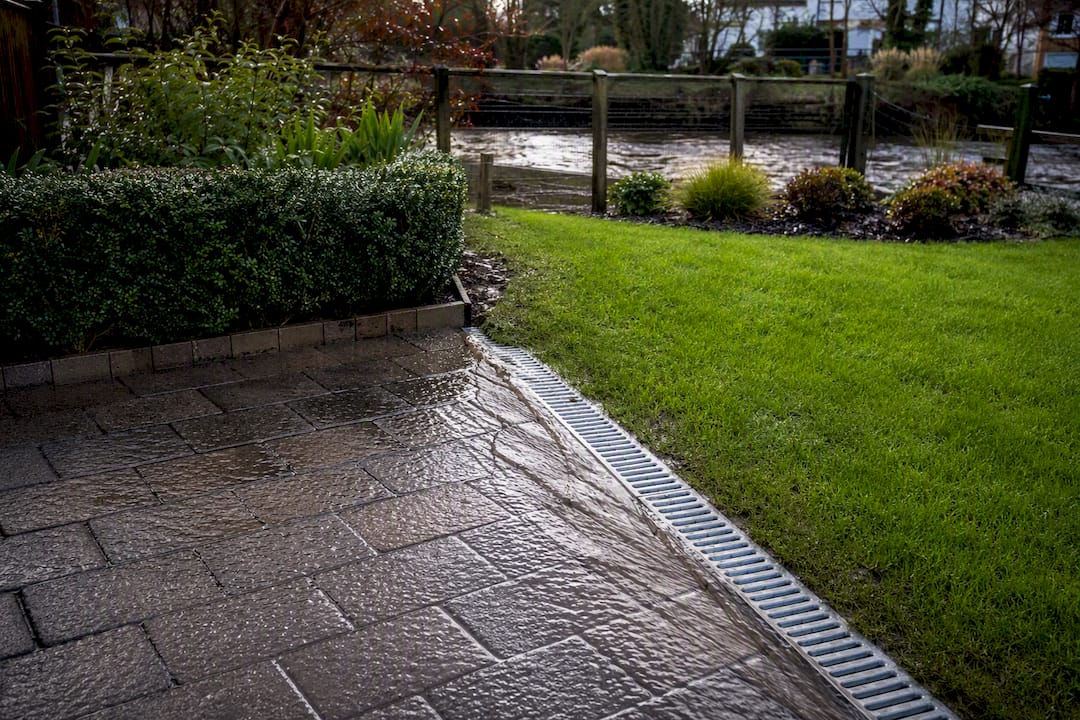
Properties in conservation areas face an additional layer: any work affecting drainage infrastructure, including altering ground levels or adding hard surfacing that changes surface water runoff, may need separate planning consent beyond the standard building control process. A CON29DW won’t state conservation area status directly, but a conveyancer should cross-reference the local authority’s planning search alongside the drainage findings whenever development is planned.
Surface water drainage also matters for climate resilience planning. Local authorities increasingly assess new development against sustainable drainage requirements, and a site with limited public sewer capacity nearby can face additional conditions before permission is granted. Buyers planning any groundworks, from a new driveway to a basement conversion, should treat the drainage search as one input among several environmental checks rather than a standalone clearance.
What actually matters when you read the report
Most buyers fixate on whether a property is connected to mains water and sewer, and miss the details that carry real financial weight. Build-over constraints and repeated sewer flooding history matter far more than a routine “connected to public sewer” line, because they point to future cost and future restriction on what you can build.
The most common mistake is treating the CON29DW as a box to tick rather than a document to interrogate. Buyers see “public sewer within boundary” and move on, without asking whether that sewer sits under the exact spot where they plan to extend. Conveyancers who raise a specific written enquiry about build-over status catch problems that a generic search summary glosses over.
The second mistake is assuming private drainage arrangements are someone else’s problem because the seller never mentioned them. They aren’t. Liability transfers with the title, and a septic tank with no service history is a cost waiting to surface. This approach exists precisely because the official report gives you data, not judgement, and buyers need both.
— Wayne
How Nofooly turns a technical report into a clear decision
A CON29DW gives you the facts. It doesn’t tell you whether a public sewer near the boundary is a genuine problem for your renovation plans or a non-issue that every neighbouring property shares. It is a practical next step for buyers who want that gap closed without hiring a full technical consultant.
Nofooly’s pre-purchase reports, starting from £29, take official data for England and Wales, covering flood risk and recorded floods, crime, planning applications, nuisance sites and local prices, and turn them into a human-checked, plain-English verdict written against your own brief. The report does not include or interpret the CON29DW itself; that is your conveyancer's document. What it adds is the wider picture around the property, so a drainage flag is weighed alongside everything else before you commit.
Where to check the official records yourself
For the most current fees, forms, and coverage areas, go directly to the source. Thames Water Property Searches covers London and the Thames Valley. United Utilities Property Searches serves the North West. Dŵr Cymru’s drainage and water enquiries cover Wales, and Severn Trent’s CON29DW pages cover the Midlands, each with liability-backed official searches.
This article is general information, not a substitute for advice from a qualified lawyer. Consult a qualified legal professional about your own circumstances before acting on anything here.
Sources
- Drainage and Water Searches Explained
- Thames Water Property Searches
- Property Searches — United Utilities
- Drainage and Water Enquiries — Dŵr Cymru Welsh Water
FAQ
How much does a drainage and water search cost?
Fees vary by undertaker and by whether you order a standard CON29DW or an asset location search, and payment is typically non-refundable once submitted, so confirm the exact figure with the relevant water company before applying.
Do I need a drainage and water search when buying a property?
Yes. It’s the only official route to confirming public sewer and water connections, billing arrangements, and asset locations within the boundary, and skipping it risks inheriting undisclosed liability for private drainage or build-over problems.
What are the drainage rules in the UK regarding private sewers?
Owners are generally responsible for maintaining private sewers, septic tanks, and unadopted lateral drains that haven’t transferred to the water company, and government guidance on managing water on land sets out broader surface water responsibilities for landowners.
How long does a drainage and water search take?
Standard CON29DW turnaround usually runs a matter of working days, though it varies by undertaker and region, and most water companies offer an expedited or same-day option for an additional fee if your transaction timeline is tight.
Can a drainage and water search affect my mortgage?
Yes, findings like unadopted private sewers, missing build-over agreements, or a history of sewer flooding can prompt a lender to request further evidence or hold funds in retention until the issue is resolved.
Short on time? Let us run the checks for you
Viewing this weekend and don't fancy an afternoon of maps? The free Foolproof Viewing Check pulls the headline tiles for any address you're looking at — no card, no sign-up.
Want the whole area read by hand and written up, checked and signed off by a real person before it reaches you? That's the Jackson pre-purchase area report. Software does the legwork so it's quick and affordable; a person makes the call so you can trust it. Reports start from £29.