Gazundering in England and Wales: How to Reduce the Risk of a Last-Minute Price Cut
Checklist for sellers and buyers in England and Wales to reduce gazundering risk. Covers legal rules, 2026 market trends and how a £29 person-checked area report gives both sides the local evidence...
In this guide
- Table of Contents
- What is gazundering, and how does it differ from gazumping?
- Is gazundering legal in the UK?
- Why gazundering happens and how common it is in 2026
- How sellers can reduce the risk of being gazundered
- What to do if a buyer tries to cut their offer at the last minute
- How solicitors, conveyancers and agents help, and where they can’t
- How pre-purchase property reports cut the risk of late renegotiation
- Standing firm without losing the sale
- Buy with the area’s evidence in hand
- Sources
- FAQ
- Recommended
Gazundering is when a buyer lowers their agreed offer just before contracts exchange, forcing the seller to accept less money or risk the sale collapsing entirely. It’s legal in England, Wales and Northern Ireland because no offer binds either party until exchange. That single fact shapes everything else in this guide, from how sellers protect themselves to where a NoFooly area report can, and cannot, help.
TL;DR:
- Gazundering is more common in a slower market and often triggered by valuation shortfalls, survey problems, or chain issues.
- Preparing early with comprehensive documents and vetting buyers reduces the likelihood of last-minute offer drops.
- A person-checked area report gives both sides the same local evidence on flood, planning and nuisance, which makes an unsupported renegotiation claim harder to sustain.
- Speeding up the conveyancing process and securing pre-contract deposits raise the cost for buyers attempting last-minute reductions.
- Holding firm on the original price is advisable if the buyer’s justification is weak or unsupported by accurate, evidence-backed data.
Table of Contents
- What is gazundering, and how does it differ from gazumping?
- Is gazundering legal in the UK?
- Why gazundering happens and how common it is in 2026
- How sellers can reduce the risk of being gazundered
- What to do if a buyer tries to cut their offer at the last minute
- How solicitors, conveyancers and agents help, and where they can’t
- How pre-purchase property reports cut the risk of late renegotiation
- Standing firm without losing the sale
- Buy with the area’s evidence in hand
- Sources
- FAQ
What is gazundering, and how does it differ from gazumping?
Gazundering happens when a buyer, having already agreed a price, drops their offer at the eleventh hour, usually days before exchange of contracts. By then the seller has often paid for surveys, given notice on a rental, or lined up their own onward purchase, so the pressure to accept the cut is real.
It’s frequently confused with its opposite, gazumping, where a seller accepts a higher offer from a new buyer after already agreeing terms with someone else. Both exploit the same legal gap: nothing is binding until exchange.
Typical triggers include:
- A mortgage valuation coming in below the agreed price
- Survey findings that reveal genuine defects, or ones a buyer exaggerates for leverage
- A buyer further down a property chain getting cold feet or losing their own buyer
- Simple market opportunism when a buyer senses the seller has no other options
Is gazundering legal in the UK?
Yes. In England, Wales and Northern Ireland, an offer carries no legal weight until written contracts are exchanged, so either side can walk away or renegotiate at any point beforehand without breaking the law. Cambridge Dictionary’s own entry on the term notes that gazundering is legal but widely seen as ethically questionable, which sums up why it causes so much frustration despite being perfectly permissible.
Scotland works differently. Its missives system, where an exchange of formal letters between solicitors creates a binding contract earlier in the process, closes much of the window that gazundering exploits south of the border. The UK government has acknowledged the problem and published a home buying and selling reform roadmap aimed at shortening conveyancing timelines, though none of those changes have reached the statute book yet.
Why gazundering happens and how common it is in 2026
Gazundering thrives in a buyer’s market, where falling prices and more choice give buyers leverage they wouldn’t have when stock is tight. Santander’s guidance on the practice notes that sellers often feel they have little choice but to accept a reduced offer rather than restart the search for a buyer from scratch.
Estate agents surveyed by The Independent reported more instances of gazundering in 2026 than in the previous year, pointing to softer prices and longer chains as the main drivers.
The usual flashpoints are predictable: a mortgage valuation that lands short of the agreed price, a survey that flags real or overstated problems, or a buyer several links down the chain pulling out. BBC News has documented cases where sellers lost tens of thousands of pounds when buyers cut their offer days before exchange, with little practical recourse once the seller had already committed to their own onward purchase.

How sellers can reduce the risk of being gazundered
Preparation shrinks the window in which gazundering can happen. The longer a sale drags between offer and exchange, the more time a buyer has to find a reason, real or invented, to renegotiate.
- Instruct your conveyancer immediately, before you even accept an offer, so searches and paperwork are already moving.
- Collate your documents early, including planning permissions, guarantees, and any building work certificates, so nothing stalls the legal process later.
- Disclose problems upfront. A buyer who discovers a defect themselves during survey has far more leverage than one you told about honestly from day one.
- Vet your buyer, not just their price. A cash buyer or one with a large deposit and a mortgage offer already in principle is far less likely to gazunder than someone at the top of a long chain.
- Consider a reservation agreement or pre-contract deposit, which asks both sides to put down a small, forfeitable sum as a signal of commitment. These aren’t universally used and carry no guarantee, but they raise the emotional and financial cost of walking away.
Pro Tip: Ask your estate agent for proof of a buyer’s mortgage-in-principle and deposit source before accepting an offer. A cheaper but demonstrably ready buyer often beats a higher offer with a shaky chain behind it.
Speed favours the seller here. Every week saved between agreeing a price and exchanging contracts is a week a buyer doesn’t have to change their mind.
What to do if a buyer tries to cut their offer at the last minute
Don’t react on the spot. Ask the buyer, through your agent or solicitor, to put their reasons in writing and back them with evidence, whether that’s a survey report or a valuation shortfall.
Your options at that point include:
- Request the survey or valuation report directly and check whether the reduction genuinely reflects the cost of remedying the issue, or whether it’s padded well beyond it.
- Counter-offer with a smaller reduction if the evidence is genuine but the ask is excessive.
- Hold firm on the original price if the justification is thin, accepting the risk that the buyer might withdraw.
- Pause and verify independently rather than making a snap decision under pressure, particularly if your own onward purchase depends on the outcome.
- Walk away and relist if the cut is opportunistic and unsupported. It’s a rational choice when the buyer’s credibility, not just their price, has collapsed.
Collapsed sales are expensive. You lose conveyancing fees already paid, restart the search for a buyer, and risk your own purchase further up the chain falling through as a result. Weigh that cost honestly against the size of the reduction being demanded before deciding whether to stand your ground.
How solicitors, conveyancers and agents help, and where they can’t
A good conveyancer speeds up searches and keeps paperwork ready, which shortens the exposure window even if it can’t remove it entirely. Agents who properly vet buyer readiness before accepting an offer prevent a good number of gazundering attempts before they start, since the strongest offer on paper isn’t always the most reliable one if the buyer’s finances or chain position are shaky.
Reservation agreements and pre-contract deposits add a financial disincentive to withdrawing, but they’re not legally enforceable contracts of sale and won’t stop a determined buyer. No solicitor can outlaw gazundering. What they can do is build enough procedural pressure and paper trail that walking away becomes costlier than following through.
How pre-purchase property reports cut the risk of late renegotiation
Many gazundering claims lean on a flood risk, a planning application or a nearby nuisance the buyer says they’ve only just discovered. An area report that both sides could have read before the offer takes much of the ambiguity out of those claims.
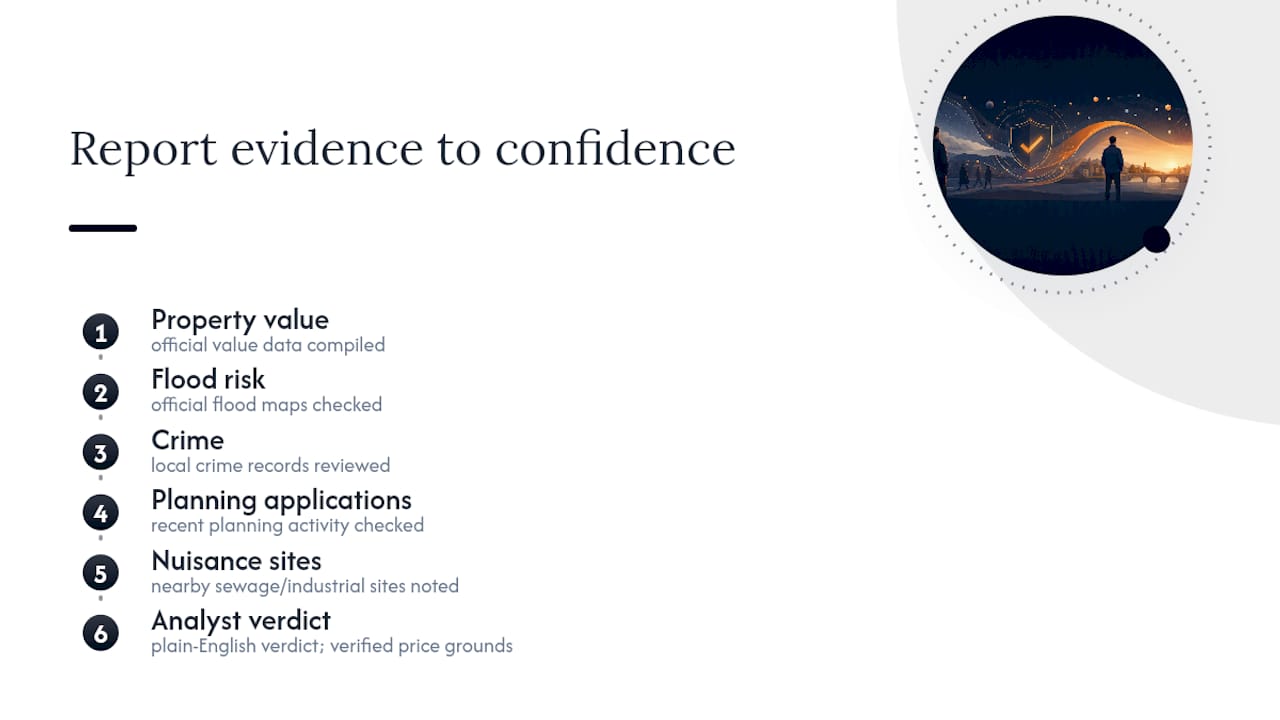
NoFooly’s area reports compile official data for England and Wales on flood risk and recorded floods, crime, planning applications, nuisance sites such as sewage works, and recent sold and asking prices, then add a plain-English verdict; on the £29 tier a named person reads it against the buyer’s own brief. A buyer who orders one before making an offer knows the area’s risks going in rather than discovering them at exchange. A seller facing a late renegotiation attempt can point to the same public data to test a claim that isn’t backed by evidence. Neither is a valuation or a survey. Fewer surprises on either side means fewer opportunities for a late, opportunistic cut.
Standing firm without losing the sale
The instinct to protect your asking price is right more often than the industry admits, but it isn’t automatically the correct call. Preserving the full price is worth the risk of collapse when the buyer’s justification is weak, unsupported by survey evidence, or clearly opportunistic given how the market has moved.
Where a genuine survey finding or valuation shortfall backs the request, a small concession usually beats a relisted property and another three months on the market. The sellers who come out ahead are the ones who ask for evidence calmly, rather than reacting to the shock of a lower number landing in their inbox days before exchange.
— Wayne
Buy with the area’s evidence in hand
There are other ways to sanity-check a property before you offer: a full structural survey, a chat with the neighbours, a look at the local authority’s planning portal yourself. All of them take time, and none of them pull flood risk, crime data, and nuisance sites into one document you can actually act on.

NoFooly Foolproof gives buyers a person-checked, plain-English report on flood risk, crime, planning, nuisance sites and local sold prices before they make an offer, so the area’s risks are known before the number goes in. On the £29 tier that includes an indicative read of whether the asking price looks in line with local evidence; it is orientation, not a valuation. The same public data gives sellers something to test a late claim against. Reports cover England and Wales only; person-checked reports start from £29 through NoFooly Foolproof, and reading one before you offer means you go into the negotiation knowing the area.
This article is general information, not a substitute for advice from a qualified financial advisor. Consult a qualified financial professional about your own circumstances before acting on anything here.
Sources
- What is gazundering and how can it be avoided? - BBC News
- Gov
- A guide to gazundering, gazumping’s evil twin - Santander
- Gazundering: what is it and what should homeowners do if it happens to them? - The Independent
FAQ
Is gazumping still legal in the UK?
Yes. Like gazundering, gazumping remains legal in England, Wales and Northern Ireland because no offer is binding until contracts exchange.
How common is gazundering in the UK?
It’s become more frequent in 2026, with estate agents surveyed by The Independent reporting more cases than the year before as market conditions have shifted towards buyers.
What is gazundering in the UK?
Gazundering is when a buyer lowers their already-agreed offer shortly before exchange of contracts, pressuring the seller to accept less or risk the sale falling through, as BBC News has reported.
Is there a risk of a property crash in the UK in 2026?
That’s a separate question from gazundering, and this article doesn’t cover UK-wide price forecasting; what’s clear is that softer local pricing conditions tend to increase gazundering attempts, as Santander’s guidance notes.
Can a pre-purchase report stop a buyer from gazundering?
Nothing can stop a buyer from attempting it, but a person-checked area report from a service like NoFooly Foolproof gives both sides the same public evidence on flood, planning and nuisance risk, which weakens an unsupported last-minute claim. It is not a valuation.
Recommended
Short on time? Let us run the checks for you
Viewing this weekend and don't fancy an afternoon of maps? The free Foolproof Viewing Check pulls the headline tiles for any address you're looking at — no card, no sign-up.
Want the whole area read by hand and written up, checked and signed off by a real person before it reaches you? That's the Jackson pre-purchase area report. Software does the legwork so it's quick and affordable; a person makes the call so you can trust it. Reports start from £29.