Pub Noise Complaints: How to Log, Report and Escalate (England & Wales)
How to log pub noise, speak to the operator and report to Environmental Health or Licensing in England and Wales, with the evidence councils weigh.
Speak to the pub's manager or Designated Premises Supervisor first and keep a dated log of each disturbance. If it continues, report it to your council's Environmental Health team, which can investigate statutory nuisance and serve an abatement notice, and you can ask the licensing authority to review the premises licence. This process applies in England and Wales.
In this guide
- Table of Contents
- Step-by-step: what residents should do first
- How to collect and present evidence Environmental Health accepts
- What happens when you report to Environmental Health
- How licensing law can add remedies
- Practical steps pubs can take to prevent or resolve complaints
- How location and area reports help residents and operators
- Balancing vibrant high streets with neighbours’ rights
- How NoFooly can help with a practical next step
- FAQ
- Sources

If a pub is disturbing you, try a courteous approach to the manager first and keep a detailed log, or consider how to list a room or shared space if shared housing issues are involved. If that fails, report it to your council's Environmental Health team with your evidence. This guide covers England & Wales only; Scotland and Northern Ireland have different licensing and nuisance rules. Councils can issue abatement notices and, where premises breach licensing conditions, trigger a licence review, so escalation carries real weight on both sides.
TL;DR:
- Keep a dated log for several weeks, recording start and finish times, noise type, impact, and any licensed activity such as live music.
- Use police only for immediate disorder or crime; send ongoing noise complaints to Environmental Health, which may investigate and issue an abatement notice.
- For a licence review, connect disturbances to activity on the premises, because general street noise after customers leave carries less weight.
- There is no national pub curfew; each premises licence sets its hours, and breaching an abatement notice can bring fines up to £20,000.
- If the council declines to act, request its reasons in writing; private action under Section 82 is possible but costly and usually a last resort.
Table of Contents
- Step-by-step: what residents should do first
- How to collect and present evidence Environmental Health accepts
- What happens when you report to Environmental Health
- How licensing law can add remedies
- Practical steps pubs can take to prevent or resolve complaints
- How location and area reports help residents and operators
- Balancing vibrant high streets with neighbours’ rights
- How NoFooly can help with a practical next step
- FAQ
- Sources
Step-by-step: what residents should do first
Start by asking to speak with the Designated Premises Supervisor (DPS), the named person responsible for running the venue under its licence. Explain calmly what you’re experiencing and when, and ask whether the pub keeps an incident book you can be logged in.
- Write down every disturbance: date, time, type of noise, and how it affected you (sleep lost, unable to use a room).
- Keep this log for several weeks so a pattern is visible, not a single bad night.
- Collect photos, short video clips, names of other affected neighbours, and any police reference numbers if there was disorder.
- Call the police only for immediate disorder or crime; for ongoing noise, your council’s Environmental Health service is the right route.
Pro Tip: Note the exact licensed activity happening at the time, such as live music or a beer garden event, since this makes your evidence far more useful for a licence review later.
How to collect and present evidence Environmental Health accepts

Officers don’t act on “it’s audible” alone. They weigh persistence, timing, lateness and the actual impact on your life, such as being kept awake or unable to use a bedroom, against what’s reasonable from a trading pub, as council guidance on noise from pubs sets out.
A log that councils tend to accept includes:
- Date and start and finish time of each incident
- The type of noise (music, shouting, glasses, car doors)
- The specific effect on you (woke you, prevented sleep, disrupted a child’s bedtime)
A council will typically ask you to keep this running for several weeks before it decides whether formal monitoring is warranted, according to North Yorkshire Council’s guidance. Where a council declines to act, individuals can bring private action under Section 82 of the Environmental Protection Act 1990, though this is costly and usually a last resort.
What happens when you report to Environmental Health
Councils have a statutory duty under the Environmental Protection Act 1990 to investigate complaints that could amount to a statutory nuisance. The process usually runs in stages:
- Triage of your complaint and log to assess whether it meets the threshold for investigation
- A site visit or diary monitoring, sometimes with equipment left at your property
- If a nuisance is confirmed, the council can serve an abatement notice requiring the pub to reduce the noise
- Failing to comply on business premises can lead to fines of up to £20,000, and in severe cases, seizure of noise-making equipment, as confirmed by GOV.UK’s noise nuisance guidance
Councils sometimes decide the evidence doesn’t meet the statutory threshold. If that happens, ask for the reasoning in writing and consider whether your log needs more detail before escalating further, including to the Licensing Authority.
How licensing law can add remedies
Alongside Environmental Health, the Licensing Act 2003 gives you a second lever. Prevention of public nuisance is one of its four licensing objectives, and the revised section 182 guidance issued in September 2026 stresses tailored, proportionate conditions rather than blanket restrictions.
- Residents can submit representations to the Licensing Authority or request a full licence review
- Evidence tying incidents to licensable activity, such as amplified music during licensed hours or crowds at closing time, carries far more weight than general street noise
- Typical conditions that follow a review include garden curfews, closed doors and windows during events, exit signage and staff patrols, rather than automatic noise limiters
Pro Tip: Street noise from people dispersing on the public highway is often treated as outside the pub’s direct control, so focus your evidence on what happens on or linked to the premises itself.
Practical steps pubs can take to prevent or resolve complaints
Most complaints are resolved through management changes rather than enforcement, and these cost far less than a licence review.
- Run staff patrols of outside areas and smoking zones, with checks logged in the incident book
- Route departing customers away from residential windows where layout allows
- Keep doors and windows closed during live music or busy events, and set clear closing times for garden use
- Use simple signage asking customers to respect neighbours when leaving
- Commission an acoustic assessment only where recurring complaints suggest a structural issue; a tailored fix beats an expensive, fixed noise limiter that wasn’t built for your venue
Document every action taken and date it. A pub that can show a consistent, cooperative response is in a far stronger position if a council or Licensing Authority ever reviews the premises.
How location and area reports help residents and operators
Local data can sharpen both a complaint and a site risk assessment. Recorded nuisance sites, planning applications nearby, and the general crime and amenity context all help explain whether a pattern of disturbance fits a wider local picture or looks unusual for the area.
- Pulling together nuisance, planning and crime data for a postcode gives useful background context alongside your own log
- An Instant Report or Area Report from NoFooly covers England & Wales only and is a data check, not a survey or legal advice
- Attaching a summary of local patterns to your complaint package, alongside your contemporaneous log, may give Environmental Health or the Licensing Authority fuller context
Balancing vibrant high streets with neighbours’ rights
Pubs anchor local life, but that doesn’t excuse disturbed sleep. The strongest outcomes come from evidence-led escalation and plain cooperation between residents, operators and councils, not from the first party to shout loudest.
— Gracie C
How NoFooly can help with a practical next step
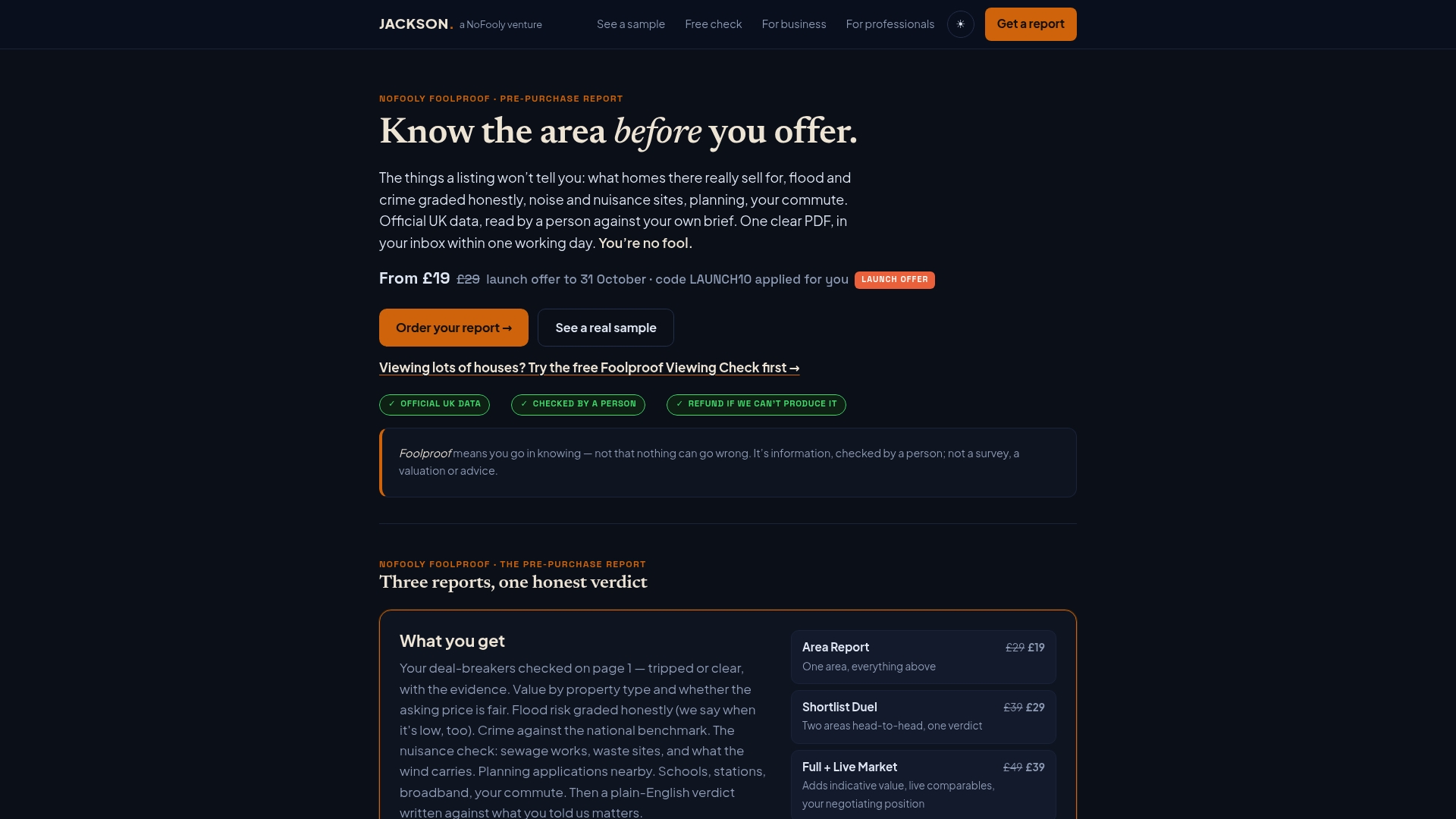
If you’re weighing up a move near a pub, or you run one and want to understand the local risk picture, we put together plain-English area reports for any postcode in England & Wales. We offer an Instant Report (£9) and a person-checked Area Report (from £19). Neither is a survey, legal advice or financial advice, but both give you data to work from. Start with our area report for your postcode.
This article is general information, not a substitute for advice from a qualified lawyer. Consult a qualified legal professional about your own circumstances before acting on anything here.
FAQ
Can I call local police for a noise complaint?
Call the police only for immediate disorder, violence or crime happening at the time. For ongoing or repeated noise from a pub, your council’s Environmental Health team is the correct route, as set out in GOV.UK’s guidance.
How to shut noisy neighbours up?
Speak to the person responsible first, whether that’s a neighbour or, for a pub, the Designated Premises Supervisor, and keep a detailed log of what happens and when. If informal contact doesn’t work, report it to Environmental Health with your evidence so they can assess whether it meets the statutory nuisance threshold.
What time do pubs need to be quiet?
There’s no single national curfew; licensing hours and any noise-related conditions are set individually on each premises’ licence. Garden curfews, closing times for music, and similar restrictions often follow from a licence review under the Licensing Act 2003’s public nuisance objective.
What time is noise complaint in the UK?
Noise complaints can be made at any time, but Environmental Health officers weigh lateness heavily when deciding whether disturbance counts as a statutory nuisance. Late-night and early-morning noise is judged more strictly than daytime noise under the same Environmental Protection Act 1990 guidance.
Sources
Short on time? Let us run the checks for you
Viewing this weekend and don't fancy an afternoon of maps? The free Foolproof Viewing Check pulls the headline tiles for any address you're looking at — no card, no sign-up.
Want the whole area read by hand and written up, checked and signed off by a real person before it reaches you? That's the Jackson pre-purchase area report. Software does the legwork so it's quick and affordable; a person makes the call so you can trust it. Reports start from £19.