Shared Ownership Resale: 3 Mistakes That Cost Sellers Weeks (England & Wales)
Practical checklist for UK shared ownership sellers: what to notify, which documents to prepare, typical fees and realistic timings, plus a NoFooly area...
Selling a shared ownership home usually starts with the housing association's nomination period, during which it markets the home to its own list at a price set by a RICS valuation. The three delays that cost sellers most: getting the valuation late, not having the lease documents and service charge accounts ready, and letting the nomination window drift without chasing it.
In this guide
- Table of Contents
- What makes a shared ownership resale different from a normal sale?
- How does the sale process actually run, step by step?
- What will the sale cost, and how long will it take?
- Do lease restrictions limit who you can sell to or how?
- Where do buyers for shared ownership resales actually come from?
- What paperwork should you prepare, and who should you instruct?
- What are your rights and obligations as a seller or buyer during resale?
- How can you prepare your home to get the best resale price?
- What sellers get wrong, and how to avoid it
- How Nofooly fits into your resale planning
- Where to read the official guidance
- Sources
- FAQ
Yes, you can sell a shared ownership resale property, but the process runs through your landlord rather than the open market from day one. You must notify your registered provider before doing anything else, and they get a nomination period, commonly 4, 8 or 12 weeks, to find an eligible buyer from their own waiting list. A RICS valuation fixes your asking price before marketing starts.
TL;DR:
- Sellers should quickly check their lease for restrictions such as price caps, nomination rights, or protections that could delay or complicate the sale process.
- Booking the RICS valuation promptly after notifying the provider helps avoid weeks of delay in obtaining a sale price for the shared ownership share.
- Costs to consider include valuation fees, resale administration charges, solicitor’s fees, and marketing expenses, which can collectively extend the sale timeline.
- If no eligible buyer is found during the nomination period, sellers generally have the right to list the property on open market channels; however, eligibility checks by the provider still apply at final sale.
- Proper preparation of paperwork such as lease documents, EPC, and service charge history can significantly speed up the resale process and reduce delays.
Table of Contents
- What makes a shared ownership resale different from a normal sale?
- How does the sale process actually run, step by step?
- What will the sale cost, and how long will it take?
- Do lease restrictions limit who you can sell to or how?
- Where do buyers for shared ownership resales actually come from?
- What paperwork should you prepare, and who should you instruct?
- What are your rights and obligations as a seller or buyer during resale?
- How can you prepare your home to get the best resale price?
- What sellers get wrong, and how to avoid it
- How Nofooly fits into your resale planning
- Where to read the official guidance
- Sources
- FAQ
What makes a shared ownership resale different from a normal sale?
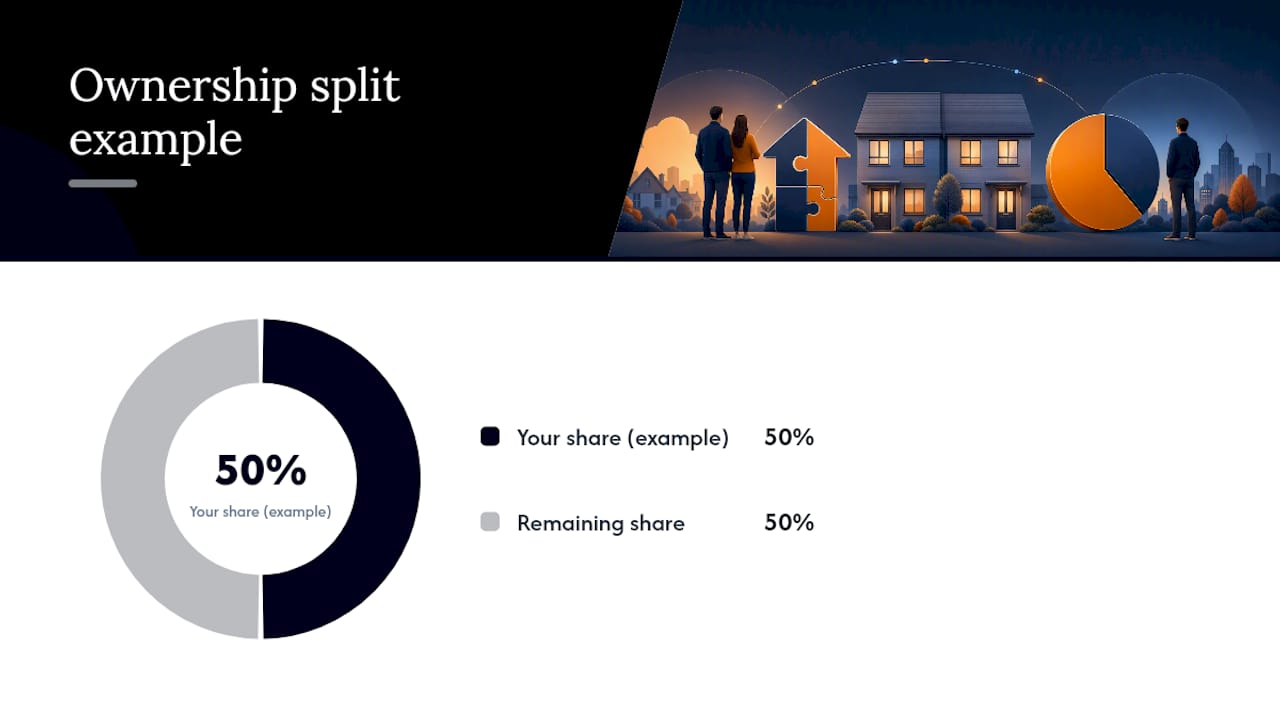
A shared ownership resale means selling the percentage share you own in the lease, not the whole freehold. If you own 50% of a flat, you’re selling that 50% stake, and the buyer steps into your position as part owner alongside the housing association. This is different from staircasing to 100% first, which turns the transaction into a standard leasehold or freehold sale with no nomination rights attached.
Your landlord, usually called the registered provider, has to be told the moment you decide to sell. They’re not a bystander in this deal. Under the terms most leases carry, they hold a right of first refusal for a set nomination window before you’re free to market the home yourself.
Before you do anything else, dig out your lease’s key information document. It will tell you:
- Your exact ownership percentage and any staircasing history
- The length of your nomination period (check this carefully, as it varies by provider and lease age)
- Whether your property sits in a designated protected or rural area with extra restrictions
How does the sale process actually run, step by step?
The process is more structured than a typical estate agency sale, and knowing the sequence saves weeks.
- Give formal notice. Write to your registered provider stating your intention to sell. They’ll usually send back a resale pack outlining their requirements and fees.
- Arrange the RICS valuation. A RICS-qualified surveyor sets the sale price for your share, and either you or the provider arranges and pays for it depending on your lease terms. Disagreements over the figure are rare but do happen; most leases allow a second opinion if you think the valuation is wrong.
- Enter the nomination period. The provider markets your home to their own waiting list. If they find a qualifying buyer, the sale proceeds through them.
- Move to the open market if needed. No nominated buyer within the window, and you’re generally free to sell independently, though the provider often still has to approve the buyer’s eligibility before exchange.
Delays usually come from one of two places: a slow valuation booking, or a nominated buyer failing their affordability checks partway through. Peabody’s resale guidance sets out a similar sequence, from resale pack request through to marketing on the waiting list.
Pro Tip: Ask your provider upfront how long your RICS valuation stays valid. Some policies treat a valuation as stale after a few months, which means paying for a second one if your sale drags past that window.
What will the sale cost, and how long will it take?
Budget for several fees before you see a penny of sale proceeds. Typical costs include:
- RICS valuation fee (paid by you or the provider, depending on your lease)
- Resale administration fee charged by the provider
- Solicitor’s fees for a shared-ownership-experienced conveyancer
- A new or updated EPC if yours has expired
- Estate agent or marketing costs, if you move to open-market sale
Administration fees and who pays what vary by provider, so check your key information document for exact figures rather than assuming a flat rate applies across housing associations.
On timing, a smooth resale with a nominated buyer found quickly can complete in a couple of months. Realistically, most sellers should expect longer once you factor in valuation booking delays, mortgage processing on the buyer’s side, and solicitor turnaround. If your provider fails to nominate a buyer and you go to open market, add further weeks for marketing and viewings before you’re even under offer.
Do lease restrictions limit who you can sell to or how?
Some leases carry protections that go beyond the standard nomination period, and they catch sellers off guard more often than they should.
Designated protected or rural area clauses exist to keep affordable homes available to local buyers. Where they apply, your provider may have a repurchase right, meaning they buy back the share themselves rather than nominating a third party, sometimes using recycled grant funding to do it. The joint guidance on model leases sets out how these repurchase and staircasing mechanics work in practice.
Staircasing limits are the other trap. Not every lease allows you to buy up to 100%. Older leases, particularly on rural exception sites, can cap staircasing at 80%, which matters enormously if you were planning to buy out the remaining share and sell as a full owner to dodge the nomination process entirely.
Before listing, check your lease for:
- Whether you’re in a designated protected or rural area
- Any staircasing cap below 100%
- Whether your lease follows the older pre-2015 Homes and Communities Agency model, which included different post-final-staircasing rights
If any of this looks unclear, get advice from a solicitor who has handled shared ownership resales specifically, not just general conveyancing. The wording on repurchase clauses is dense, and a generalist can miss a restriction that changes your entire timeline.
Where do buyers for shared ownership resales actually come from?
Your provider’s own waiting list is the first stop, and legally it has to be, given the nomination period. They’ll market your home internally before you’re allowed to look elsewhere.
Once that window closes without a buyer, national portals and housing association resale pages become your main channels. You can search directly for shared ownership resales through provider websites and dedicated listing platforms, and in London, Homes for Londoners aggregates listings across boroughs.
A few practical steps make your listing perform better once it’s live:
- Get a current EPC; an expired one stalls serious enquiries
- Use clear, well-lit photos and an accurate floorplan, not a rough sketch
- Have your key information document ready to send to interested buyers immediately, since delays here lose momentum fast
What paperwork should you prepare, and who should you instruct?
Getting your documents together before you give notice shaves real time off the process later.
- Your lease and key information document. These confirm your share, staircasing history, and any restrictions a buyer’s solicitor will ask about.
- A current EPC. Renew it early if it’s close to expiring.
- Service charge and reserve fund history. Buyers’ solicitors will request several years of statements, and gathering these late is a common bottleneck.
- Mortgage lender details. Your lender needs to consent to the sale and confirm your outstanding balance.
On instructing professionals, use a solicitor who has handled shared ownership resales before, not one encountering the tenure for the first time. The same applies to your RICS surveyor and, if you’re buying elsewhere, a mortgage broker familiar with shared ownership deposits.
Pro Tip: If you’re weighing up whether your asking price looks right against what’s actually selling nearby, a report like NoFooly’s Area Report can give you sold-price context by street and property type. It’s not a substitute for your RICS valuation, but it helps you enter that conversation with your eyes open.
What are your rights and obligations as a seller or buyer during resale?
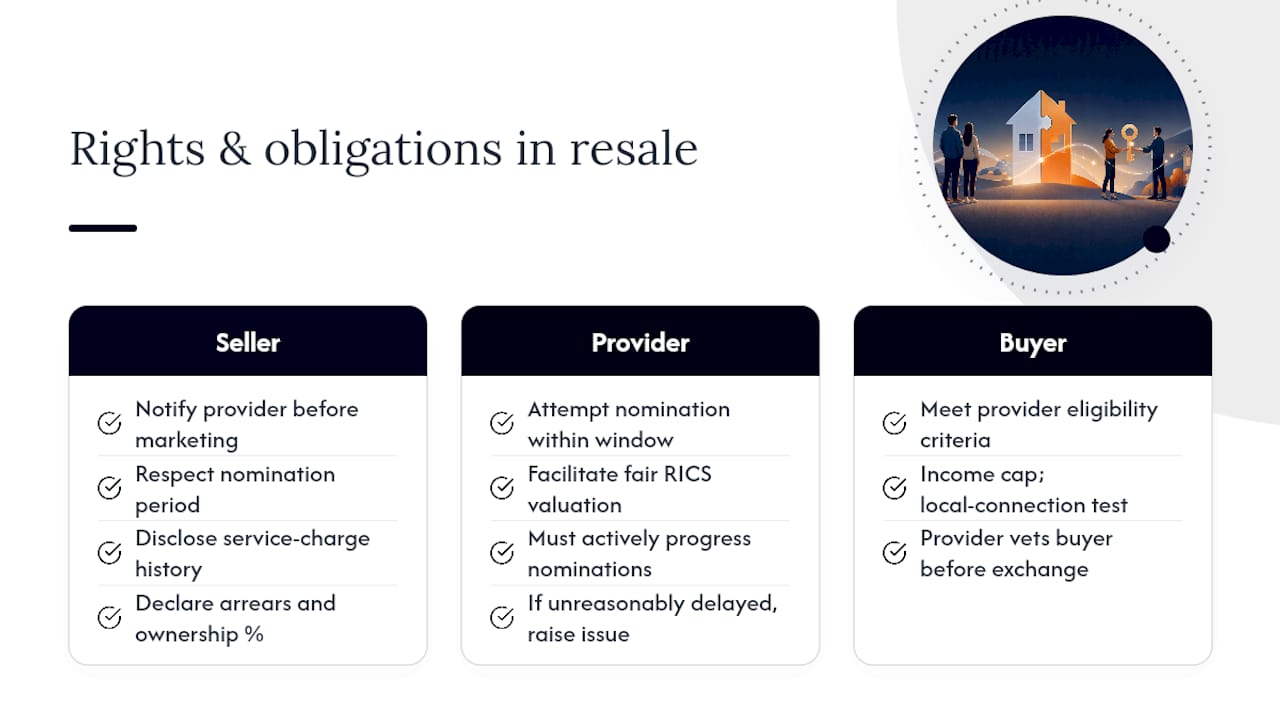
As the seller, your main legal obligation is notifying your registered provider before marketing anywhere else, and respecting the nomination period rather than trying to bypass it. You’re also required to disclose your service charge history, any arrears, and the accurate ownership percentage; misrepresenting any of this can unwind a sale late in the process.
Your provider’s obligation runs the other way. They must genuinely attempt to nominate a qualifying buyer within the agreed window rather than sitting on the notice, and they must facilitate the RICS valuation process fairly. If they drag the nomination period out without real effort, that’s worth raising directly, since your right to move to open-market sale depends on that window actually closing.
Buyers, meanwhile, have to meet the provider’s eligibility criteria, typically an income cap and a local connection test in some areas, before any nomination is confirmed. Even after the nomination period ends and you sell independently, the provider generally still vets the final buyer’s eligibility before exchange, which is a detail sellers frequently miss and assume the open-market route means no further oversight.
Everyone in the chain, seller, buyer and provider, is bound by the terms in the lease itself, so any dispute usually gets resolved by referring back to that document rather than general property law.
How can you prepare your home to get the best resale price?
A RICS valuation is based on comparable evidence and the physical condition of your property, so presentation still matters even though you’re not negotiating on price the way you would in an open-market sale.
Start with the basics: fix anything that would flag as disrepair during a valuation visit, from damp patches to broken fixtures. A surveyor working from comparable evidence will still note obvious condition issues that could justify a lower figure.
Get your EPC renewed if it’s within a year of expiring; an out-of-date certificate slows down both the valuation paperwork and any eventual marketing. Have your service charge statements and reserve fund history ready in one file, since buyers’ solicitors ask for these early and a fast response keeps their interest warm.
If your home has had any staircasing activity, document it clearly. A buyer needs to understand exactly what percentage they’re purchasing and what the remaining rent and service charge structure looks like once they own it.
Finally, think about timing your valuation close to when you actually plan to market. A valuation that sits unused for months can go stale under provider policy, forcing a costly repeat visit right when you’re trying to move quickly.
What sellers get wrong, and how to avoid it
Most delays trace back to the same three mistakes. Sellers check the lease too late, discovering a staircasing cap or protected-area clause only after they’ve told the provider they’re ready to move. They wait to book the RICS valuation until the nomination period has already started, burning weeks of the window doing nothing. And they instruct a solicitor who has never handled a shared ownership transaction, which turns straightforward paperwork into back-and-forth queries.
Fix all three early: read your lease before you give notice, book your valuation the same week you notify your provider, and pick a solicitor who can say, without hesitation, that they’ve done this before.
— Gracie C
How Nofooly fits into your resale planning
There are other ways to check whether your resale price stacks up, from asking a local agent for a rough opinion to trawling sold-price listings yourself. Nofooly is a faster route to the same evidence base, built specifically for the checks buyers and sellers of England and Wales property need before committing to a figure.

For £9, the Instant Report gives you sold prices by street and property type, nearby planning applications, flood detail, crime data and broadband coverage for any postcode, generated in minutes. If you want more, a more detailed area report includes an analyst reading it against your own written brief, adding sale history, tenure and a plain verdict on whether an asking price looks fair against the local evidence. None of this replaces your RICS valuation, and it isn’t a survey, a conveyancing check or a mortgage valuation. It’s data, read by a person, that helps you walk into your valuation conversation already knowing what similar homes nearby have actually sold for. Check your postcode and see what the local evidence says before your resale price gets set.
Where to read the official guidance
For the exact legal wording, go straight to the primary sources rather than relying on secondhand summaries. GOV.UK covers both selling your shared ownership home and finding a shared ownership home to buy. The joint guidance on model leases explains repurchase and staircasing clauses in full. Shelter’s shared ownership advice is also worth reading for a plain-English breakdown of tenant rights during resale.
Sources
- Gov
- Shared Ownership - Joint Guidance (model lease and repurchase rules)
- Selling your Shared Ownership home - Peabody New Homes
FAQ
How do I find shared ownership resales?
Start with your target provider’s own resale list, since eligible buyers are matched through the nomination period before homes go elsewhere. After that, national portals and housing association websites list resales that missed internal nomination, and Homes for Londoners covers London specifically.
Is shared ownership worth it in the UK?
It depends on your local rental costs, mortgage affordability and how comfortable you are with lease restrictions like staircasing caps and nomination periods. For many buyers priced out of full ownership, it offers a genuine route onto the ladder, but the resale process is slower and more structured than an open-market sale.
Can I sell my share of a jointly owned shared ownership property?
You can sell your share, but you must notify your registered provider first, and they get a nomination period to find a buyer before you can market it independently. If you’ve staircased to 100%, the nomination process no longer applies and the sale runs like a standard property transaction.
Is shared ownership a trap?
It isn’t a trap in the sense of trapping you in the property, since selling is always possible with notice to your landlord. The friction comes from restrictions like nomination periods, RICS valuation requirements and, in some leases, staircasing caps that limit how much of the property you can ever own outright.
Short on time? Let us run the checks for you
Viewing this weekend and don't fancy an afternoon of maps? The free Foolproof Viewing Check pulls the headline tiles for any address you're looking at — no card, no sign-up.
Want the whole area read by hand and written up, checked and signed off by a real person before it reaches you? That's the Jackson pre-purchase area report. Software does the legwork so it's quick and affordable; a person makes the call so you can trust it. Reports start from £29.