Does Living Near a Park Increase Crime Risk?
Does living near a park raise crime risk? What police.uk crime data and park design actually show, and how to check your own postcode properly.
Not in itself. Research shows no consistent link between park proximity and higher crime; what matters is the surrounding postcode's crime rate and the park's lighting, visibility, maintenance and level of use. Anti-social behaviour and theft are the offences most often recorded in parks, rather than the burglary or vehicle crime that affects homes nearby.
In this post
- Table of Contents
- Does Living Near a Park Actually Increase Crime Risk?
- Understanding Crime Map by Postcode Data
- How to Check Police.uk Crime Data for Your Area
- Park Safety at Night: What the Evidence Shows
- Park Design and Crime: How Layout Affects Risk
- Factors That Actually Drive Crime Near Parks
- How to Assess Park Proximity When Buying or Renting
- Frequently Asked Questions
Last Updated: October 23, 2026
Quick Summary
Does living near a park increase crime risk? Parks themselves don't cause crime, but the relationship is nuanced. What matters is the park's maintenance, lighting, visibility, activity levels, and the broader neighbourhood crime rate, which often matters far more than park proximity alone.
- Check your postcode's overall crime rate against the national average using police.uk data before assessing park-related risk.
- Visit the park at different times to assess lighting, visibility, maintenance, and how actively people use it.
- Anti-social behaviour is the most common crime recorded near parks, which differs from crimes affecting residents directly like burglary.
- A well-maintained park in a low-crime postcode is unlikely to increase safety risk; a high-crime postcode matters more than park proximity.
- Park design, including clear sightlines and good lighting, correlates with lower crime risk more than the park's existence alone.
Table of Contents
- Does Living Near a Park Actually Increase Crime Risk?
- Understanding Crime Map by Postcode Data
- How to Check Police.uk Crime Data for Your Area
- Park Safety at Night: What the Evidence Shows
- Park Design and Crime: How Layout Affects Risk
- Factors That Actually Drive Crime Near Parks
- How to Assess Park Proximity When Buying or Renting
- Frequently Asked Questions
Does Living Near a Park Actually Increase Crime Risk?
The short answer: not necessarily. Does living near a park increase crime risk? Parks themselves don't cause crime. But the relationship between park proximity and crime is more nuanced than most people assume. At JACKSON, we analyse crime data across postcodes and find that what matters isn't the park, it's what happens around it.
The real question isn't whether parks increase crime. It's whether a specific park in a specific area, at specific times, creates conditions where crime occurs. Visibility, maintenance, activity levels, and foot traffic all play a role. So does the broader neighbourhood crime rate, which often matters far more than park proximity alone.
This guide walks you through how to assess park-related crime risk properly. We'll show you how to read official crime data, what factors actually influence safety, and how to evaluate a location when a park is nearby.
Understanding Crime Map by Postcode Data
Crime doesn't distribute evenly. Some postcodes have significantly higher crime rates than others. The police.uk crime map breaks this down by postcode, showing where crimes are recorded and what type they are.
Start by checking the overall crime rate for your postcode against the national average. A postcode with 80 crimes per 1,000 residents tells a very different story than one with 20. This baseline matters more than park proximity.
The police.uk map shows 14 crime categories: burglary, robbery, theft from vehicles, criminal damage, anti-social behaviour, and others. Parks often appear in theft and anti-social behaviour data because they're public spaces where people gather. But this doesn't mean parks cause crime, it means crime is recorded where people congregate.
When you're evaluating a property near a park, pull the crime data for that postcode first. Then look specifically at what crimes are recorded near the park itself. Anti-social behaviour near a park at midnight is different from a theft reported at noon on a Saturday. Context matters.
police.uk crime mapping tool lets you filter by crime type and month. Use this to build a real picture of what actually happens in your area, not assumptions.
How to Check Police.uk Crime Data for Your Area
Open the police.uk crime map and search for your postcode. The map shows crime incidents as points on a street-level view. Zoom in to see where crimes cluster.
Look for patterns. Are crimes spread across the postcode, or concentrated in specific areas? If they're concentrated near the park, that's worth noting. If they're scattered throughout the neighbourhood, the park isn't the defining factor.
Filter by crime type. Theft and anti-social behaviour dominate park areas in many postcodes. Burglary and vehicle crime are typically recorded at residential addresses, not parks. This tells you something important: the crimes near parks are usually different from the crimes that affect residents directly.
Check the timeline. Download data for the last 12 months. Parks often show higher anti-social behaviour in summer months when more people use them. Winter crime patterns near parks can be quite different. If you're worried about evening safety, bear in mind the published data doesn't show time of day, so visit after dark yourself.
Compare your postcode to neighbouring postcodes. If your area has similar or lower crime than surrounding postcodes, park proximity is less of a concern. If it's significantly higher, investigate why, it's usually not the park.
The police.uk data is free and updated monthly. Spend 15 minutes with it before making assumptions about safety.
Park Safety at Night: What the Evidence Shows
Night-time safety near parks is a legitimate concern. Parks are less visible after dark, fewer people use them, and lighting varies widely. Anti-social behaviour and street crime do increase in some parks at night.
But "parks at night" isn't one category. A well-lit, well-maintained park with clear sightlines and regular foot traffic behaves very differently from an overgrown, poorly lit space.
The research on park crime generally shows that poorly maintained parks with limited visibility and low activity levels correlate with higher crime. Well-maintained parks with good lighting and regular use don't. This suggests the park's condition matters more than its existence.
If you're concerned about evening safety, visit the park at night. Walk around it. Notice the lighting, the visibility, whether other people are using it, and whether it feels actively maintained. This 20-minute visit tells you more than any statistic.
Check what the local council says about the park. Many councils publish maintenance schedules and lighting plans. If the park is scheduled for improvements, that's relevant. If it's been neglected, that's also relevant.
The key question: is this a park where people actively spend time in the evening, or is it empty and dark? Activity and lighting reduce crime risk far more than the park's size or proximity to residential areas.
Park Design and Crime: How Layout Affects Risk
Park design shapes how safe people feel and, to some extent, whether crime occurs. Two parks can have identical crime statistics but feel completely different based on their layout.
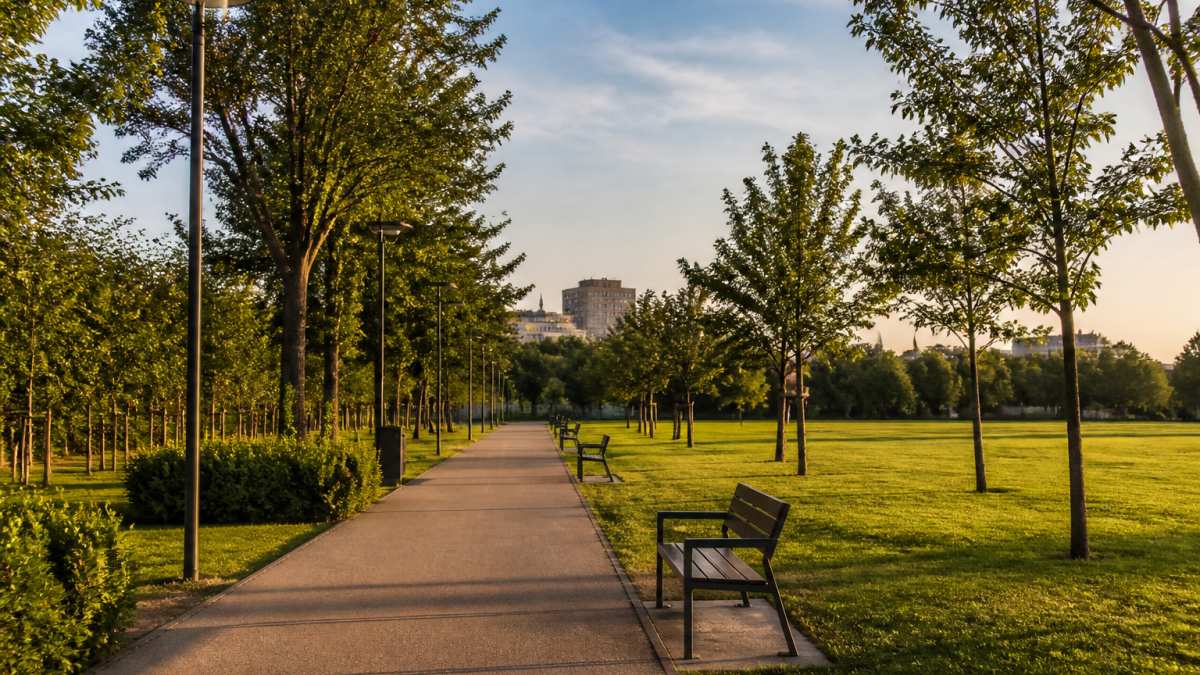
Visibility and sightlines
A park with clear sightlines, where you can see from one end to the other, and trees and bushes don't create hidden areas, feels safer and often is safer. Poor visibility creates places where unwanted activity can happen unseen. If you're walking through a park, you want to see who's around you.
Check whether trees are maintained. Overgrown bushes and low branches create blind spots. Well-maintained parks trim vegetation to maintain sight lines. This is a simple, observable indicator of park maintenance standards.
Lighting matters enormously. Parks with modern street lighting along main paths are used more in the evening. Parks with poor or no lighting are abandoned after dark. If you're concerned about evening safety, check the lighting during a visit.
Maintenance and activity levels
Active parks have more people. More people means more witnesses and less opportunity for crime. A park with sports facilities, playgrounds, and regular events draws foot traffic. An empty park doesn't.
Check whether the park has events or regular activities. Does the council run programmes? Are there sports clubs? Is it used by joggers, dog walkers, and families? High activity reduces crime opportunity.
Maintenance is visible. Litter, broken benches, graffiti, and overgrown areas suggest low maintenance. Well-maintained parks with clean facilities and functioning equipment suggest active management. This correlates with lower crime risk.
Visit the park on a weekday morning, afternoon, and evening. Is it busy? Are people using it? Or is it mostly empty? The answer tells you about activity levels and, indirectly, about the likelihood of crime.
Factors That Actually Drive Crime Near Parks
Whether living near a park increases crime risk isn't straightforward. Park proximity isn't a strong predictor of crime. Broader neighbourhood factors are. Understanding this distinction changes how you assess risk.
Overall postcode crime rate matters far more than park proximity.
Deprivation and unemployment correlate with crime. Parks in areas with higher unemployment and lower income levels tend to have higher crime rates. This isn't about the park, it's about the neighbourhood.
Population density affects crime patterns. Dense urban areas have higher absolute crime numbers but sometimes lower crime rates per capita. Parks in sparse suburban areas can have very different crime profiles than parks in city centres.
Anti-social behaviour is often the most common crime recorded near parks. This includes rowdy behaviour, noise, and minor incidents. It's different from violent crime or burglary. Understanding what crimes are actually recorded near your park matters.
The type of park shapes crime patterns. Small neighbourhood parks used by families and dog walkers have different crime profiles than large parks used for events and gatherings.
ONS crime statistics provides postcode-level data you can compare. Use this to understand whether your area's crime rate is driven by park-related factors or broader neighbourhood issues.
How to Assess Park Proximity When Buying or Renting
Start with the postcode crime data. Pull 12 months of police.uk records for your specific postcode. Compare it to the national average and to neighbouring postcodes. This gives you the baseline.
Look at what crimes are recorded. If your postcode has low overall crime, park proximity is unlikely to be a significant safety concern.
Visit the park at different times. Morning, afternoon, evening, and night if you're comfortable doing so. Notice the lighting, visibility, maintenance, and activity levels. Trust your own assessment of how the space feels.
Check the council's park maintenance records and any planned improvements. Many councils publish this information online. A park scheduled for lighting upgrades or maintenance work is being actively managed.
Talk to current residents. Ask them about safety, park use, and any concerns. They have lived experience that statistics don't capture.
Read the local news. Local news sites often report on crimes in specific areas. If there's a pattern of serious crime near the park, you'll likely find it reported.
Compare the park concern to other property factors. A property near a well-maintained park in a low-crime postcode is probably fine.
At JACKSON, we combine crime data with other neighbourhood factors, flood risk, noise, planning activity, and sold prices, to give you a fuller picture of the area.
Assessing a property near a park means looking beyond the park itself. At JACKSON, we help you read the data that matters: police.uk crime statistics for your area, set against the national benchmark and alongside flood, noise, planning and sold-price data for the same postcode (England & Wales only). Council maintenance records and how busy the park is are things to check for yourself.
Frequently Asked Questions
Does living near a park increase crime risk?
Research does not show a consistent link between park proximity and higher crime rates. Crime patterns depend on multiple factors including park design, maintenance, lighting, and surrounding neighbourhood characteristics. Using police.uk crime data for your specific postcode provides a more accurate picture than assumptions about park location alone.
How do I check crime rates using police.uk crime data?
Visit police.uk and enter your postcode to view recorded crimes for your area over the past 12 months, broken down by crime type and location. You can compare your postcode's figures against national averages to understand local crime patterns. The data updates monthly and shows where crimes occurred, helping you assess specific neighbourhoods.
Is park safety at night a significant concern?
Park safety at night depends heavily on design features like lighting, visibility, and maintenance. Parks with poor lighting and dense vegetation may feel less safe, but well-designed parks with active use and clear sightlines can be safe evening spaces. Check your local park's specific features and review crime data for your postcode rather than assuming park proximity creates risk.
What should I look for when assessing a property near a park?
Check police.uk crime data for your specific postcode, examine the park's design (lighting, visibility, maintenance), review local planning records for any issues, and speak to current residents about their experiences. Consider how the park is used, whether it hosts regular activities, and what facilities exist. These factors matter more than park proximity alone when evaluating neighbourhood safety.

Short on time? Let us run the checks for you
Viewing this weekend and don't fancy an afternoon of maps? The free Foolproof Viewing Check pulls the headline tiles for any address you're looking at — no card, no sign-up.
Want the whole area read by hand and written up, checked and signed off by a real person before it reaches you? That's the Jackson pre-purchase area report. Software does the legwork so it's quick and affordable; a person makes the call so you can trust it. Reports start from £19.
Frequently asked questions
Does living near a park increase crime risk?
Research does not show a consistent link between park proximity and higher crime rates. Crime patterns depend on multiple factors including park design, maintenance, lighting, and surrounding neighbourhood characteristics. Using police.uk crime data for your specific postcode provides a more accurate picture than assumptions about park location alone.
How do I check crime rates using police.uk crime data?
Visit police.uk and enter your postcode to view recorded crimes for your area over the past 12 months, broken down by crime type and location. You can compare your postcode's figures against national averages to understand local crime patterns. The data updates monthly and shows where crimes occurred, helping you assess specific neighbourhoods.
Is park safety at night a significant concern?
Park safety at night depends heavily on design features like lighting, visibility, and maintenance. Parks with poor lighting and dense vegetation may feel less safe, but well-designed parks with active use and clear sightlines can be safe evening spaces. Check your local park's specific features and review crime data for your postcode rather than assuming park proximity creates risk.
What should I look for when assessing a property near a park?
Check police.uk crime data for your specific postcode, examine the park's design (lighting, visibility, maintenance), review local planning records for any issues, and speak to current residents about their experiences. Consider how the park is used, whether it hosts regular activities, and what facilities exist. These factors matter more than park proximity alone when evaluating neighbourhood safety.