How to Verify Local School Catchment Area Boundaries (England & Wales)
How to check school catchment boundaries in England & Wales: council admissions maps, DfE tools, edge cases, and getting written confirmation.
Use your local council's official admissions map (primary and secondary are often separate), check which side of the line your exact address falls, then ask the admissions team to confirm in writing. Third-party checkers are only a guide and boundaries can be redrawn, so recheck annually. Living in catchment does not guarantee a place.
In this post
- Table of Contents
- Why Verifying School Catchment Boundaries Matters
- Finding Your Local School Catchment Area Map
- Using a School Catchment Area Checker
- Understanding School Admissions Catchment Area Rules
- Interpreting Boundary Lines and Edge Cases
- Staying Alert to School Catchment Boundary Changes
- Verifying Your Address with the Local Authority
- Frequently Asked Questions
Table of Contents
- Why Verifying School Catchment Boundaries Matters
- Finding Your Local School Catchment Area Map
- Using a School Catchment Area Checker
- Understanding School Admissions Catchment Area Rules
- Interpreting Boundary Lines and Edge Cases
- Staying Alert to School Catchment Boundary Changes
- Verifying Your Address with the Local Authority
- Frequently Asked Questions
Last Updated: October 12, 2026
Why Verifying School Catchment Boundaries Matters
How to verify local school catchment area boundaries is one of the most practical steps you can take when buying a home with school-age children or planning a move. The postcode alone doesn't tell you which schools your children can attend. This guide covers England and Wales; Scotland and Northern Ireland run different admissions systems. Boundaries shift. Admissions rules change. A property that looks perfect on paper might fall just outside the catchment for the school you assumed your children would go to.
This matters because school allocation can affect your child's schooling and, often, demand for homes in the area. Families often discover too late that their address sits on the wrong side of a boundary line. By then, they've already committed to the purchase.
The good news: verifying catchment boundaries is straightforward once you know where to look. Most local authorities publish their maps online. You can cross-check your address against official data in under an hour. We'll walk you through exactly how.
Finding Your Local School Catchment Area Map
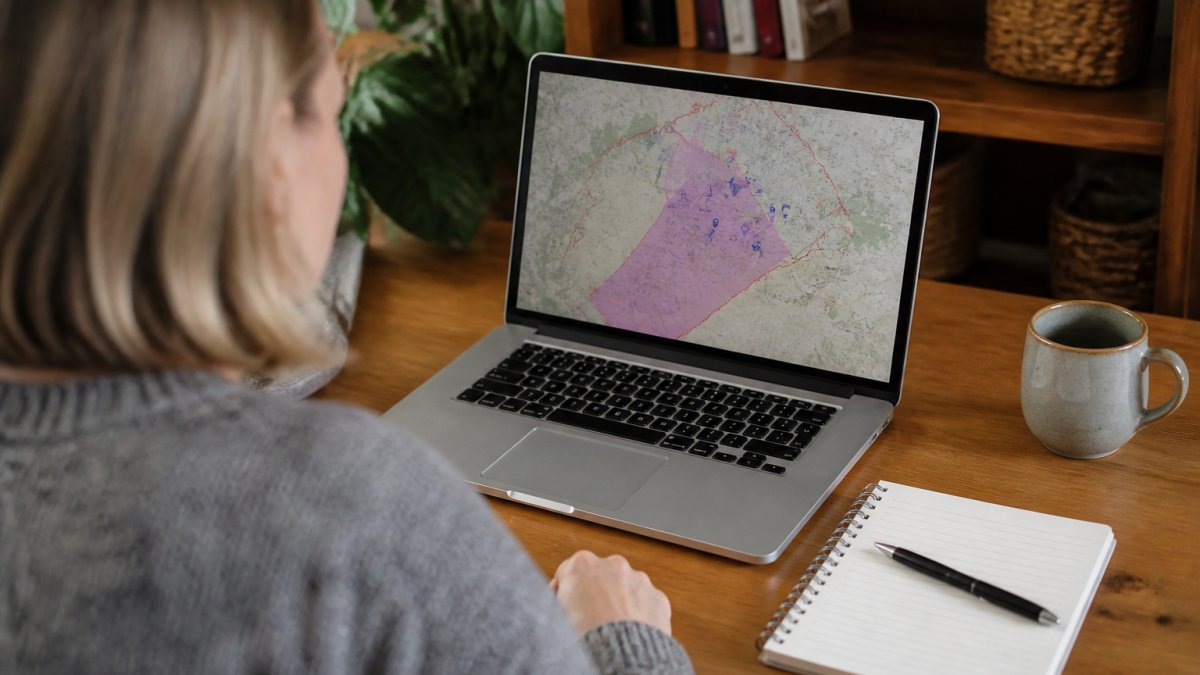
Your local council publishes school catchment area maps online. These are the official boundaries used for admissions. Start by visiting your local authority's website and searching for "school catchment area map" or "admissions map."
Most councils provide interactive maps where you can enter your postcode and see which schools are designated for your address. Some publish PDF maps by school or by ward. The quality and format vary significantly between authorities, so you may need to dig a little.
Here's what to look for:
- The council's dedicated admissions or education pages
- Links labelled "school catchment maps" or "designated schools"
- Separate maps for primary and secondary schools (they're often different)
- PDF downloads or interactive online tools
- The date the map was last updated
If the council website is unclear, contact the admissions team directly. They can confirm which schools are designated for your postcode in writing. This email confirmation is useful to keep on file.
Some councils are more transparent than others. If you can't find the map easily, that's a red flag to contact them before you proceed. Don't assume you know which school your child will attend based on proximity alone.
Using a School Catchment Area Checker
Several organisations offer school catchment area checker tools that combine council data with other information. These can save time if you're comparing multiple postcodes.
The Department for Education provides a school finder tool on its website. Enter your postcode and you'll see nearby schools, though this doesn't always show catchment boundaries explicitly. Some third-party education websites aggregate catchment data from multiple councils, but verify any result against your local council's official map.
When using a checker tool:
- Always verify the result against your council's official map
- Check the date the tool was last updated
- Understand that checkers are guides, not definitive
- Contact your council to confirm if the tool shows conflicting information
Tools are helpful for quick screening. They're not a substitute for the official council map. The council's own data is the legal source for admissions decisions.
Understanding School Admissions Catchment Area Rules
School admissions catchment area rules vary by local authority and by school type. Understanding the rules matters because catchment doesn't always guarantee a place.
In many councils, living within the catchment area is the primary criterion for admission. However, oversubscribed schools may use additional tie-breakers:
- Distance from the school (measured from your home address)
- Whether you have a sibling already at the school
- Whether a parent works at the school
- Medical or social need
- Looked-after children status
Some schools are selective (grammar schools in certain areas) and catchment doesn't apply at all. Academy schools and free schools may have different rules than community schools. Faith schools often prioritise families of that faith regardless of catchment.
The rules also depend on whether you're applying for primary or secondary school. Primary applications are typically handled by your local council (Apply for a primary school place). Secondary applications may be coordinated across multiple councils if you're moving between authority areas.
Read your local council's admissions code. It sets out the exact rules for your area. This document is published annually and is available on the council website. Don't rely on assumptions or what worked for a friend in a different area.
Interpreting Boundary Lines and Edge Cases
Boundary lines on maps can be confusing, especially if your property sits near the edge. A street might be split, with one side in catchment and the other side out. A development built after the map was drawn might not appear on older versions.
When interpreting a boundary:
- Identify your exact address, not just your street
- Check which side of the boundary line your property falls
- Look for notes on the map about recent changes
- If the boundary runs through your street, confirm your side explicitly with the council
- Be aware that flat numbers and house numbers on the same street can be in different catchments
Edge cases are common. Your house number might be just inside the boundary, or just outside. The map might show your street but not mark individual properties. This is where contacting the council directly saves confusion.
Ask the council to confirm in writing which schools are designated for your specific address. Include your full postcode and house number in your request. This written confirmation is valuable if there's ever a dispute later.
Staying Alert to School Catchment Boundary Changes
School catchment boundaries change. New schools open. Existing schools expand. Boundaries are redrawn to balance admissions demand. These changes are usually announced by the local council several months in advance, but not always widely publicised.
Changes typically happen:
- When a new school opens in an area
- When an existing school expands significantly
- When a school closes
- When admissions demand shifts dramatically
- At the start of a new academic year
To stay informed:
- Check your council's admissions page regularly
- Sign up for council newsletters about education and admissions
- Contact the admissions team if you're in a transition period
- Ask about any planned changes when you verify your catchment
If you're buying a property now and your child won't start school for several years, revisit the boundaries annually. A boundary change between now and then could affect which school your child attends. It's unlikely but possible.
Verifying Your Address with the Local Authority
The final step is to get written confirmation from your local authority. Don't rely on an online tool or a map printout. Contact the admissions team directly and ask them to confirm which schools are designated for your address.
Most councils respond to these queries within a few working days. Some have online forms you can submit. Others prefer email or phone contact. Find the right department on the council website, it's usually called "School Admissions" or "Education Admissions."
When you contact them, provide:
- Your full postcode
- Your house number and street name
- The academic year you're interested in (if applying soon)
- Your child's date of birth (if relevant)
Ask for confirmation in writing. Keep the email or letter. If there's ever a question about admissions later, you'll have evidence of what you were told.
This step takes 10 minutes but gives you far more confidence. It's particularly important if you're buying a property specifically because of a school, or if the boundary appears to run close to your address.
Verifying how to verify local school catchment area boundaries before you buy helps you plan with clearer information. Start with your local council's official map. Use online tools as a quick check, but always confirm with the authority in writing. If boundaries are unclear or changing, ask the admissions team to clarify before you commit to a property.
When you're researching a property, school catchment is just one piece of the puzzle. At JACKSON, we help you look at the wider picture: flood risk, crime data, noise, planning applications nearby, and local amenities. An area report sits alongside your survey and conveyancing searches; they do different jobs, and the report is data, not advice. Start with the free check to see what data is available for your postcode.
Frequently Asked Questions
How do I find the catchment area for a specific school?
Start by visiting your local council's website and searching for 'school catchment maps' or 'school admissions'. Most councils publish interactive maps showing catchment boundaries. You can also contact the school directly or check the Department for Education's school finder tool. Enter your postcode to see which schools are designated for your address and their catchment areas.
Can school catchment boundaries change, and how would I know?
Yes, school catchment boundary changes do occur. Councils typically announce changes through their admissions policy documents, usually published in September for the following academic year. Check your local council's admissions page annually, and sign up for email alerts if available. If you're considering a property near a boundary, contact the local authority directly to confirm current and planned changes.
Does living in a school catchment area guarantee my child a place?
No. Living within a school catchment area does not guarantee admission. Schools prioritise applications based on their admissions policy, which typically ranks siblings, distance from school, and special circumstances above catchment status. Oversubscribed schools may not admit all catchment-area applicants. Always check the school's specific admissions criteria and speak to the local authority about your child's likelihood of placement.
What should I do if my address is near a catchment boundary?
If your property is close to a boundary line, request written confirmation from the local authority about which catchment area your address falls into. Provide your full postcode and property address. Ask about any planned boundary changes in the next few years. This verification is especially important if school choice is a key factor in your property decision, as boundary interpretation can sometimes vary.
Short on time? Let us run the checks for you
Viewing this weekend and don't fancy an afternoon of maps? The free Foolproof Viewing Check pulls the headline tiles for any address you're looking at — no card, no sign-up.
Want the whole area read by hand and written up, checked and signed off by a real person before it reaches you? That's the Jackson pre-purchase area report. Software does the legwork so it's quick and affordable; a person makes the call so you can trust it. Reports start from £19.
Frequently asked questions
How do I find the catchment area for a specific school?
Start by visiting your local council's website and searching for 'school catchment maps' or 'school admissions'. Most councils publish interactive maps showing catchment boundaries. You can also contact the school directly or check the Department for Education's school finder tool. Enter your postcode to see which schools are designated for your address and their catchment areas.
Can school catchment boundaries change, and how would I know?
Yes, school catchment boundary changes do occur. Councils typically announce changes through their admissions policy documents, usually published in September for the following academic year. Check your local council's admissions page annually, and sign up for email alerts if available. If you're considering a property near a boundary, contact the local authority directly to confirm current and planned changes.
Does living in a school catchment area guarantee my child a place?
No. Living within a school catchment area does not guarantee admission. Schools prioritise applications based on their admissions policy, which typically ranks siblings, distance from school, and special circumstances above catchment status. Oversubscribed schools may not admit all catchment-area applicants. Always check the school's specific admissions criteria and speak to the local authority about your child's likelihood of placement.
What should I do if my address is near a catchment boundary?
If your property is close to a boundary line, request written confirmation from the local authority about which catchment area your address falls into. Provide your full postcode and property address. Ask about any planned boundary changes in the next few years. This verification is especially important if school choice is a key factor in your property decision, as boundary interpretation can sometimes vary.