Is Night Flight Noise Affecting Your Home? (England & Wales)
Night flight noise near residential areas can disrupt sleep. Learn how to check flight paths, find noise maps and report disturbance in England and Wales.
You can find out by checking the nearest airport's noise contour map by postcode (noting its date), its published night restrictions and dispensations, and its flight path or track-keeping tool across several nights. Then keep a timed log for about two weeks and match each event to a specific flight; events that line up with flight times are aircraft noise, the rest point to other sources.
In this post
- Table of Contents
- Why Night Flight Noise Matters for Residential Areas
- How to Find an Aircraft Noise Map for Your Postcode
- Checking Night Flight Restrictions at Your Local Airport
- Tracing the Flight Paths Near My Home
- Separating Aircraft Noise From Other Night-Time Sounds
- Documenting Disturbance and Making an Airport Noise Complaint
- Your Next Step: Checking Your Area Before You Move
- Frequently Asked Questions
Last Updated: November 5, 2026
Quick Summary
Night flight noise is one of the most common complaints from people living near airports, and it is easy to miss on a viewing. Check the airport's aircraft noise map by postcode, its night restrictions, and flight paths on several nights before you buy or rent.
- Night-time noise is judged more harshly than daytime noise
- Check the publication date on any aircraft noise map before relying on it
- Night restrictions use movement quotas or noise quotas, set airport by airport
- Restrictions have exceptions for weather, air traffic control and emergencies
- Keep a timed log for two weeks and match each event to a flight
Table of Contents
- Why Night Flight Noise Matters for Residential Areas
- How to Find an Aircraft Noise Map for Your Postcode
- Checking Night Flight Restrictions at Your Local Airport
- Tracing the Flight Paths Near My Home
- Separating Aircraft Noise From Other Night-Time Sounds
- Documenting Disturbance and Making an Airport Noise Complaint
- Your Next Step: Checking Your Area Before You Move
- Frequently Asked Questions
Why Night Flight Noise Matters for Residential Areas
Night flight noise is one of the most common complaints from people living near airports, and it often goes unnoticed when you view a property. Jackson's area reports look at noise alongside flood, crime and planning data, because a listing rarely mentions it. Night flights matter most because they arrive when you are trying to sleep, and that is when a noise is hardest to ignore.
The impact depends on how often flights pass over, how loud they are, and whether your home sits under a flight path. Some streets get a few movements a week, while others get several an hour during peak periods. A short walk around the street at night can reveal more than a daytime visit ever will.
- Night-time noise is judged more harshly than daytime noise
- Sleep disturbance can build up over weeks and months
- Flight paths can change with weather and runway use
How to Find an Aircraft Noise Map for Your Postcode
An aircraft noise map shows the areas where noise is expected to be highest. Most airports publish these as part of their environmental reporting, and they can be searched by postcode or street name. Start with the airport closest to the property you are considering, then look for its noise contour maps.
Check the date on any map before you rely on it. Flight patterns and runway use change over time, so an older map may not reflect current operations. Compare the map with a site visit at the times that matter to you.
- Find the nearest airport to the postcode
- Open its noise contour or noise mapping page
- Search by postcode and check the publication date
- Note whether the postcode sits inside the marked contours
Checking Night Flight Restrictions at Your Local Airport
Night flight restrictions are the part of airport operations most likely to be summarised in a listing as "some aircraft noise" and then left there. In practice the rules are specific, published and checkable, and they tell you far more about what a street will actually sound like at 2am than any estate-agent description.
Start with the definition of the night period. Night quota periods are set airport by airport, and some airports use a simple curfew rather than a quota. The airport's published operating information or its noise and track-keeping pages will state the exact hours that apply, so read those rather than assuming the London pattern holds everywhere.
Next, understand how the limit is expressed. There are two common mechanisms:
- A movement quota, which caps the number of take-offs and landings allowed in the night period, often counted separately for arrivals and departures.
- A noise quota, which assigns each aircraft a quota count based on its certified noise level, so a noisier aircraft uses up more of the allowance than a quieter one. This is why fleet change matters: replacing older aircraft with newer, quieter types can cut disturbance even when the number of movements stays the same.
The details differ by airport, so check the current published schedule rather than a summary from a few years ago.
Watch out: restrictions are not absolute. Most night regimes include dispensations for delays caused by weather, air traffic control or emergencies, and these can produce late movements on nights when you expected none. A single noisy night is not proof that the rules are being ignored.
Enforcement is the part residents most often ask about. Airports monitor night movements against their limits, and their published noise information shows how those limits are applied. If you want to check whether a particular night breached the rules, the airport's noise and track-keeping system usually lets you look up a specific time and see the movement, the aircraft type and the track.
Finally, set realistic expectations. Restrictions reduce night noise but do not remove it. An airport operating at its quota limit will still have a steady pattern of early-morning arrivals and late departures, and the shoulder hours can be busier than the core. When you view a property, ask the seller or letting agent what the night pattern is like in practice, then check that against the published limits rather than taking either account on trust. For the wider picture on how noise sits alongside other local data, see our area reports.
Tracing the Flight Paths Near My Home
Flight paths determine which streets sit under aircraft on arrival and departure. Paths are often set by air traffic control and can shift with wind, weather and runway choice. Most airports publish flight path maps, and some offer live tracking tools that show recent movements.
Check flight paths on several days, and at night if you can. A single day can look very different from a typical week. Pay particular attention to approach and departure routes, as these are usually the lowest and loudest parts of a flight.
Separating Aircraft Noise From Other Night-Time Sounds
Not every night noise comes from aircraft. Traffic, late-night activity, railway lines and nearby industry can all sound similar from inside a home. Listen at different times and note what you hear, when, and for how long.
A simple test is to keep a log for several nights. Write down the time, the sound and whether it matches a flight movement shown on a tracking tool. Patterns that follow flight times point to aircraft, while sounds without a link to flights point to other sources.
Documenting Disturbance and Making an Airport Noise Complaint
Most guidance on aircraft noise stops at "contact the airport". That is the easy part. The harder part, and the one that decides whether a complaint is acted on, is producing a record that ties a specific noise event to a specific flight at a specific time. This section sets out a practical process you can follow as a resident, whether you own or rent.
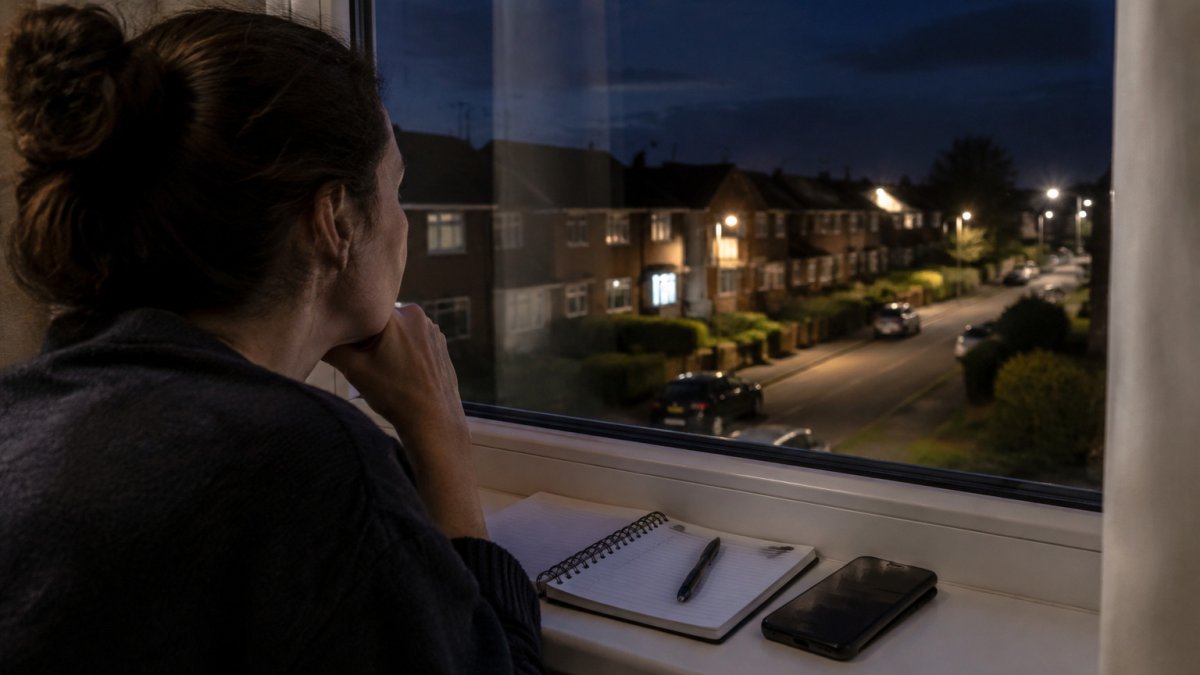
Step 1: Build a simple log
Keep a running record for at least two weeks, covering both weeknights and weekends. For each event, note:
- The date and the time to the minute.
- Whether it was an arrival or a departure, if you can tell.
- How long the noise lasted.
- What it did, woke you, interrupted sleep, made the building shake, forced you to close windows.
- The weather at the time, since wind direction affects which runway is in use and therefore which streets sit under the flight path.
A spreadsheet or a notes app is fine. The point is consistency, not presentation.
Step 2: Match each event to a flight
Use the airport's noise and track-keeping system, or a public flight-tracking tool, to look up the time you recorded. Note the aircraft type and the track. This is what turns a general complaint into evidence: a logged event at 02:14 that matches a specific arrival on a specific track is far more useful than a paragraph saying the nights are noisy.
Watch out: timestamps on tracking tools can differ by a minute or two from your own clock, and tracks are smoothed. Allow a small margin when matching, and record the flight identifier alongside your own time rather than replacing it.
Step 3: Note the pattern, not just the incidents
A single bad night is rarely actionable. A pattern of events clustering in the same hour, on the same approach, on the same nights of the week is. Summarise your log into a short table showing how many events fell in each hour band and how many caused sleep disturbance. That summary is what a noise team can actually work with.
Step 4: Report through the right channel
Contact the airport's noise team directly using its published complaints process. Most ask for your postcode, the times involved and a description of the impact, and many now accept complaints through an online form linked to their track-keeping system. Keep copies of everything you send and note any reference number. If the airport has a consultative committee, its meetings are public and its papers often summarise complaint volumes by area, which is a useful cross-check on whether your street is an outlier or part of a wider pattern.
Step 5: Know what redress realistically looks like
Be clear-eyed about outcomes. Airports can investigate, explain and, where rules are breached, act on the operator (Aircraft noise complaints and enquiries). They cannot make an individual flight go away, and they do not compensate residents for ordinary disturbance. Check whether the airport publishes any residential support scheme and its eligibility criteria rather than assuming you qualify.
For the mechanics of logging and escalating a noise problem more generally, see our Pub Noise Complaints: How to Log, Report and Escalate (England & Wales) guide, and for building a wider record of local data, see From CSVs to FOI: England & Wales noise complaint data, or a £9 report.
Your Next Step: Checking Your Area Before You Move
Night flight noise is easy to miss on a viewing and hard to fix once you have moved in. Before you make an offer, check the noise maps, restrictions and flight paths for the area, and compare them with your own timed observations. Our area reports bring together official noise, flood, crime and planning data in one place, so you can see some of the risks a listing may leave out. The free Viewing Check is a good place to start; it covers England & Wales only.
Frequently Asked Questions
How can I check whether a property is affected by night flight noise?
Start with the airport's published flight path and noise information, then compare it against the location of the property. Official noise contour maps show average noise exposure, but they do not show individual flights, so use them as a guide rather than a verdict. Check whether the airport publishes historical flight tracks for the nights you are concerned about. An area report can bring together the official noise and planning data for a postcode, which helps you see whether aircraft noise is one of several factors to weigh before you make an offer or sign a tenancy.
Are night flights restricted in England and Wales?
Many airports in England and Wales operate under night-time restrictions, but the detail varies by airport. Some restrict certain types of flight during set hours, while others limit total movements. Check the specific airport's published operating restrictions rather than assuming a general rule applies. Restrictions can change, so confirm the current position directly with the airport or the relevant authority before relying on it.
Where can I find an aircraft noise map for my area?
Airports publish noise information, including contour maps showing average noise exposure around an airport. These maps are usually updated periodically and reflect modelled averages over a year rather than individual nights. When you look at a map, check its date and the metric it uses, because a map showing average daytime noise will not tell you how often a property is disturbed at night. Use the map to identify whether a postcode sits inside a relevant contour, then look at flight path information for more detail.
What can I do if aircraft noise is disturbing me at night?
Keep a dated log of disturbing events, noting the time, the approximate loudness, and whether you could hear aircraft. Report the disturbance to the airport's noise complaints team, quoting the date and time, and ask what information they can share about flights in that period. If the disturbance continues, you can raise it with your local council's environmental health team. Practical steps such as improving window seals or using a bedroom with the quietest outlook can help, but they do not remove the noise itself.

Short on time? Let us run the checks for you
Viewing this weekend and don't fancy an afternoon of maps? The free Foolproof Viewing Check pulls the headline tiles for any address you're looking at — no card, no sign-up.
Want the whole area read by hand and written up, checked and signed off by a real person before it reaches you? That's the Jackson pre-purchase area report. Software does the legwork so it's quick and affordable; a person makes the call so you can trust it. Reports start from £19.
Frequently asked questions
How can I check whether a property is affected by night flight noise?
Start with the airport's published flight path and noise information, then compare it against the location of the property. Official noise contour maps show average noise exposure, but they do not show individual flights, so use them as a guide rather than a verdict. Check whether the airport publishes historical flight tracks for the nights you are concerned about. An area report can bring together the official noise and planning data for a postcode, which helps you see whether aircraft noise is one of several factors to weigh before you make an offer or sign a tenancy.
Are night flights restricted in England and Wales?
Many airports in England and Wales operate under night-time restrictions, but the detail varies by airport. Some restrict certain types of flight during set hours, while others limit total movements. Check the specific airport's published operating restrictions rather than assuming a general rule applies. Restrictions can change, so confirm the current position directly with the airport or the relevant authority before relying on it.
Where can I find an aircraft noise map for my area?
Airports publish noise information, including contour maps showing average noise exposure around an airport. These maps are usually updated periodically and reflect modelled averages over a year rather than individual nights. When you look at a map, check its date and the metric it uses, because a map showing average daytime noise will not tell you how often a property is disturbed at night. Use the map to identify whether a postcode sits inside a relevant contour, then look at flight path information for more detail.
What can I do if aircraft noise is disturbing me at night?
Keep a dated log of disturbing events, noting the time, the approximate loudness, and whether you could hear aircraft. Report the disturbance to the airport's noise complaints team, quoting the date and time, and ask what information they can share about flights in that period. If the disturbance continues, you can raise it with your local council's environmental health team. Practical steps such as improving window seals or using a bedroom with the quietest outlook can help, but they do not remove the noise itself.