Assessing neighbourhood safety before buying a house (England & Wales)
How to assess neighbourhood safety before buying a house in England and Wales: crime data, flood risk, planning, noise and sold prices from official sources.
Start with police.uk crime figures for the postcode and compare them with the national picture, then check flood risk on the Environment Agency (England) or Natural Resources Wales map, search the council's planning portal, and visit at different times of day to judge noise. Add Land Registry sold prices for the trend. Recorded crime and flood maps show risk, not certainty.
In this post
- Table of Contents
- Why neighbourhood safety matters when buying a house
- Check crime statistics by postcode
- Is my property in a flood zone?
- How to check planning applications for a property
- Assess noise and environmental factors
- Review sold prices and neighbourhood trends
- Putting it together: a neighbourhood safety checklist
- Frequently Asked Questions
Table of Contents
- Why neighbourhood safety matters when buying a house
- Check crime statistics by postcode
- Is my property in a flood zone?
- How to check planning applications for a property
- Assess noise and environmental factors
- Review sold prices and neighbourhood trends
- Putting it together: a neighbourhood safety checklist
- Frequently Asked Questions
Last Updated: October 4, 2026
Why neighbourhood safety matters when buying a house
Buying a house is one of the biggest financial decisions you'll make. Most people focus on the property itself, the kitchen, the garden, the number of bedrooms. But neighbourhood safety matters just as much. A house in the wrong area can affect your quality of life, your safety, and your ability to sell later.
Neighbourhood safety isn't just about crime rates. It includes flood risk, noise, planning applications that might affect your view or peace, and broader trends in the area. These factors don't appear in property listings. You need to dig into official data to find them.
At JACKSON, we help buyers understand what they're really buying into. By checking official sources before you make an offer, you're less likely to be caught out by costly surprises.
Check crime statistics by postcode
The easiest place to start is crime data. The police publish detailed crime figures for every postcode in England and Wales. You can compare your postcode against the national average to see whether it's safer or less safe than other areas.
Visit police.uk crime statistics. Enter your postcode and you'll see:
- How many crimes were reported in the last 12 months
- What types of crimes are most common (burglary, theft, violence, antisocial behaviour)
- How your postcode compares to the national average
The data updates monthly.
One thing to remember: crime data reflects reported crimes, not all crimes. Some areas have higher reporting rates than others. But it's still the best official source available.
Walk the area at different times of day. Visit on a weekday morning, a Friday night, and a Sunday afternoon. You'll get a real feel for how the neighbourhood changes. Talk to people who live there. Ask about their experience of safety, noise, and local services.
Is my property in a flood zone?
Flooding is one of the biggest environmental risks to property in England and Wales. If your house floods, it can cost tens of thousands to repair. It also affects your insurance premiums and your ability to sell later.
The Environment Agency publishes detailed flood risk maps for England. Visit Environment Agency flood risk maps. You can search by postcode or property address.
The maps show four flood risk levels (very low, low, medium and high); the bands below are a rough guide, so check the exact definitions on the site:
- Low risk: Less than 1 in 1,000 annual chance of flooding
- Medium risk: Between 1 in 100 and 1 in 30 annual chance
- High risk: Greater than 1 in 30 annual chance
- Very high risk: Not a current Environment Agency band; high (greater than 1 in 30) is the top category
If your property is in a medium or high-risk zone, ask the seller whether the property has flooded before. Check the local planning portal for any planning applications related to flood defences. Request a specialist flood survey before you buy.
In Wales, use Natural Resources Wales flood risk information. The system works the same way.
Flood risk is not the same as flood history. A property in a high-risk zone may never have flooded. But the maps give you the best official estimate.
How to check planning applications for a property
Planning applications reveal what's been built, what's been refused, and what might be built next. A planning application for a new office block next to your house, or for a nightclub, could seriously affect your quality of life.
Every local council publishes planning applications online. Search your local council's planning portal by postcode or property address. You'll find:
- What applications have been submitted for your property and nearby properties
- Whether they were approved or refused
- What the proposals were
Look for applications within the last five years. Check nearby properties too, within 100 metres is a good range. If there's a pending application for a large building, a commercial use, or multiple units, ask yourself whether it would affect you.
You can also check whether there are any enforcement cases, these are investigations into breaches of planning rules. If a neighbour built something without permission and the council is investigating, you might want to know.
Planning applications don't tell you the legal status of a building. That's a conveyancer's job. But they give you a clear picture of what's been approved and what's planned for the area.
Assess noise and environmental factors
Noise is one of the most common complaints from homebuyers. It's also one of the hardest to predict. A road that's quiet on a Sunday morning might be loud during rush hour.
Visit the property at different times. Spend time in the garden. Open the windows and listen. Is there traffic noise? Aircraft noise? Noise from a pub or restaurant? These things matter for your day-to-day quality of life.
Check whether the property is near a major road, railway line, or airport. Use Google Maps to see what's nearby. If it's close to a busy road, noise is likely. If it's under a flight path, you'll hear planes regularly.
The local council sometimes publishes noise maps. These show areas with high noise levels from roads, railways, and aircraft. Check your local council's environmental health team or planning department to see whether they have this data.
Look for nuisance sites too, these are places that cause environmental problems. Landfill sites, industrial estates, and sewage treatment works can all affect air quality and smell. The Environment Agency publishes a register of these sites. Search online for your local area.
Review sold prices and neighbourhood trends
Sold prices tell you how the area is changing. If prices have been rising steadily, the neighbourhood is likely becoming more desirable. If they're flat or falling, it might be worth asking why.
Visit HM Land Registry house prices. You can search by postcode to see what properties have sold for in the last few years. The data is public and free.
Look at:
- What prices were achieved in the last 12 months
- Whether prices are rising or falling
- How long properties are taking to sell
A postcode where properties sell quickly and prices are rising suggests strong demand. One where properties linger on the market might suggest weaker demand or hidden problems.
Talk to local estate agents. They know the area well. Ask them about local trends, problem areas, and what's driving prices. They can also tell you about planned developments that might affect the area.
Check the local council's housing strategy. Some councils are investing heavily in an area, new transport links, schools, parks. Others are in decline. This affects long-term prospects.
Putting it together: a neighbourhood safety checklist
You now have the tools to assess neighbourhood safety before you buy. Use this checklist to make sure you've covered everything.
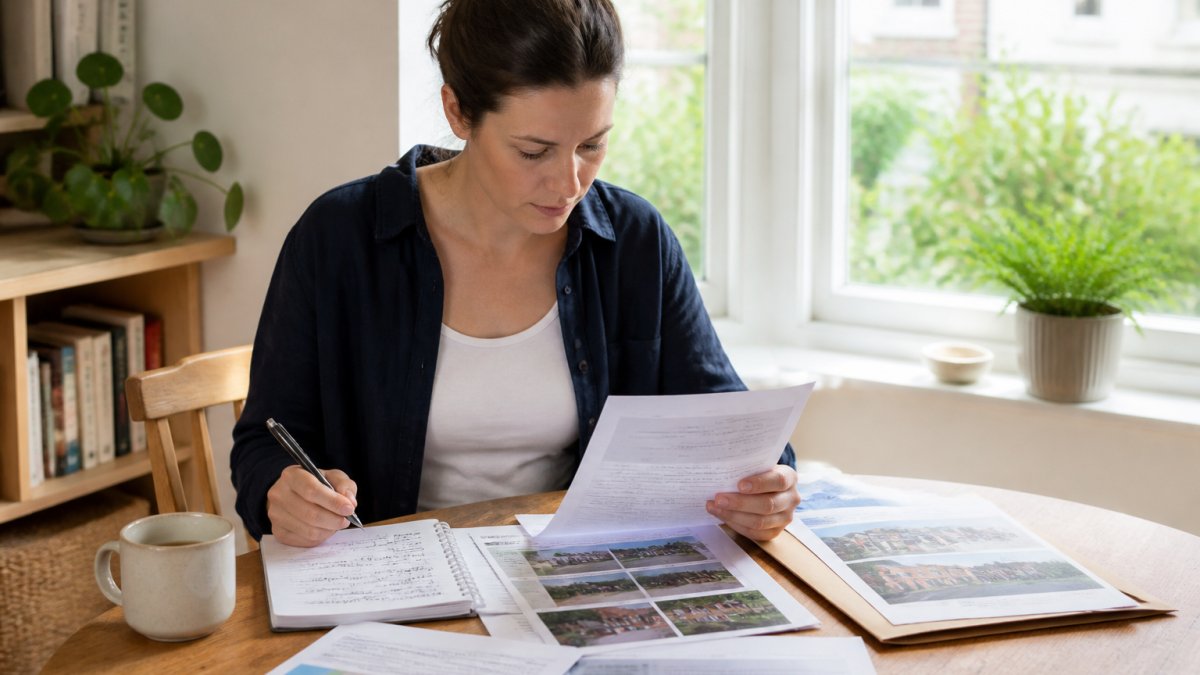
Before you make an offer:
- Check crime statistics on police.uk for your postcode
- Compare your postcode against the national average
- Visit the area at different times of day and night
- Check flood risk on the Environment Agency website
- Ask the seller whether the property has ever flooded
- Search the local planning portal for applications on and near the property
- Check for any enforcement cases or breaches of planning rules
- Visit the property at different times to assess noise levels
- Check for nearby nuisance sites or environmental hazards
- Review sold prices in the postcode on HM Land Registry
- Talk to local estate agents about trends in the area
- Walk the streets and talk to neighbours
This checklist covers the main risks. But every property and every neighbourhood is different. If something doesn't feel right, trust your instinct. Ask more questions. Get a specialist survey if you're concerned about flood risk or other environmental factors.
A neighbourhood safety check isn't a substitute for a professional survey. A surveyor assesses the condition of the building itself. A neighbourhood check assesses the area around it. You need both.
JACKSON provides area reports that bring together flood risk, crime, planning, noise, and sold prices in one place. On the person-checked tiers a named analyst reads the data against your brief and signs the verdict, so you don't have to dig through multiple websites. But the official sources, police.uk, the Environment Agency, HM Land Registry, and your local planning portal, are free and always available.
Take time before you buy. The neighbourhood you choose will affect your life for years to come.
Frequently Asked Questions
How can I check crime statistics by postcode for a specific neighbourhood?
Visit police.uk and enter your postcode to see recorded crimes in that area over the past 12 months. The site displays crime types, locations, and outcomes. Compare the figures to the national average using ONS data to understand whether the neighbourhood is safer or less safe than the broader picture. This free tool gives you raw crime data, though it doesn't explain context or trends.
Is my property in a flood zone?, and how do I check?
Use the Environment Agency's flood risk checker at gov.uk/check-flood-risk. Enter your postcode to see if your property sits in a flood zone. The tool shows historical flood records and whether the area has experienced flooding. This is essential before buying, as flood risk affects insurance costs and property resilience. Cross-reference with local council records for any recorded flooding in the specific street.
What other environmental and safety factors should I consider beyond crime and floods?
Check radon levels through the UK Health Security Agency maps, noise exposure using local council noise monitoring data, and proximity to industrial or nuisance sites via the local planning portal. An area report can bring these factors together with crime and flood data, giving you a clearer picture of neighbourhood risks alongside a plain-English verdict signed by a named analyst.
How do I find out about planning applications near a property I'm considering?
Visit your local council's planning portal and search by postcode or address. You can see approved applications, appeals, and pending decisions for neighbouring properties. This reveals whether a new building, extension, or change of use is planned nearby that could affect your neighbourhood. Planning history also indicates whether the area is actively developing or stable.
Neighbourhood safety is too important to leave to chance. Before you commit to a property, verify the facts. Use the official sources in this guide to understand flood risk, crime, planning applications, and local trends. If you want a comprehensive overview of all these factors in one place, start with JACKSON's free Viewing Check to see what data is available for your postcode.
Short on time? Let us run the checks for you
Viewing this weekend and don't fancy an afternoon of maps? The free Foolproof Viewing Check pulls the headline tiles for any address you're looking at — no card, no sign-up.
Want the whole area read by hand and written up, checked and signed off by a real person before it reaches you? That's the Jackson pre-purchase area report. Software does the legwork so it's quick and affordable; a person makes the call so you can trust it. Reports start from £19.
Frequently asked questions
How can I check crime statistics by postcode for a specific neighbourhood?
Visit police.uk and enter your postcode to see recorded crimes in that area over the past 12 months. The site displays crime types, locations, and outcomes. Compare the figures to the national average using ONS data to understand whether the neighbourhood is safer or less safe than the broader picture. This free tool gives you raw crime data, though it doesn't explain context or trends.
Is my property in a flood zone?, and how do I check?
Use the Environment Agency's flood risk checker at gov.uk/check-flood-risk. Enter your postcode to see if your property sits in a flood zone. The tool shows historical flood records and whether the area has experienced flooding. This is essential before buying, as flood risk affects insurance costs and property resilience. Cross-reference with local council records for any recorded flooding in the specific street.
What other environmental and safety factors should I consider beyond crime and floods?
Check radon levels through the UK Health Security Agency maps, noise exposure using local council noise monitoring data, and proximity to industrial or nuisance sites via the local planning portal. An area report can bring these factors together with crime and flood data, giving you a clearer picture of neighbourhood risks alongside a plain-English verdict signed by a named analyst.
How do I find out about planning applications near a property I'm considering?
Visit your local council's planning portal and search by postcode or address. You can see approved applications, appeals, and pending decisions for neighbouring properties. This reveals whether a new building, extension, or change of use is planned nearby that could affect your neighbourhood. Planning history also indicates whether the area is actively developing or stable.